

Why I Built Praxismith: From Typing Into a Box to Doing Real Work
For the last two years, almost everyone I know has had a browser tab open with an AI chat box.
People use it to draft an awkward email, tidy up notes from a meeting, or get ideas for a presentation. But after the initial novelty wears off, a quiet frustration sets in. You ask for a draft, get back three paragraphs of polished generic prose, spend fifteen minutes rewriting it so it actually sounds like you, and wonder if it saved any time at all.
The internet's response to this has been a flood of "cheat sheets", 500-prompt carousels, and video courses showing someone asking an AI to write a poem about marketing.
None of that survives contact with a real job.
A real job does not run on clever prompts. It runs on messy GST invoices, confusing vendor contracts, customer WhatsApp threads, spreadsheets with missing columns, and decisions that carry actual consequences if they are wrong.
I built Praxismith because I wanted an honest, disciplined way to teach people how to use AI for that kind of work.
The Missing Half of Learning AI
Most material treats AI like an oracle: you type a clever prompt, and it hands you the answer.
In software engineering, we learned long ago that you never trust raw input from an external system without tests, boundaries, and validation. Working with AI is no different. The secret to getting reliable output is not finding the magic words; it is building a simple system around it.
Both courses in Praxismith are organized around a single rule:
Point it at an outcome, give it your context, check what comes back, keep what worked, and only then let it act.
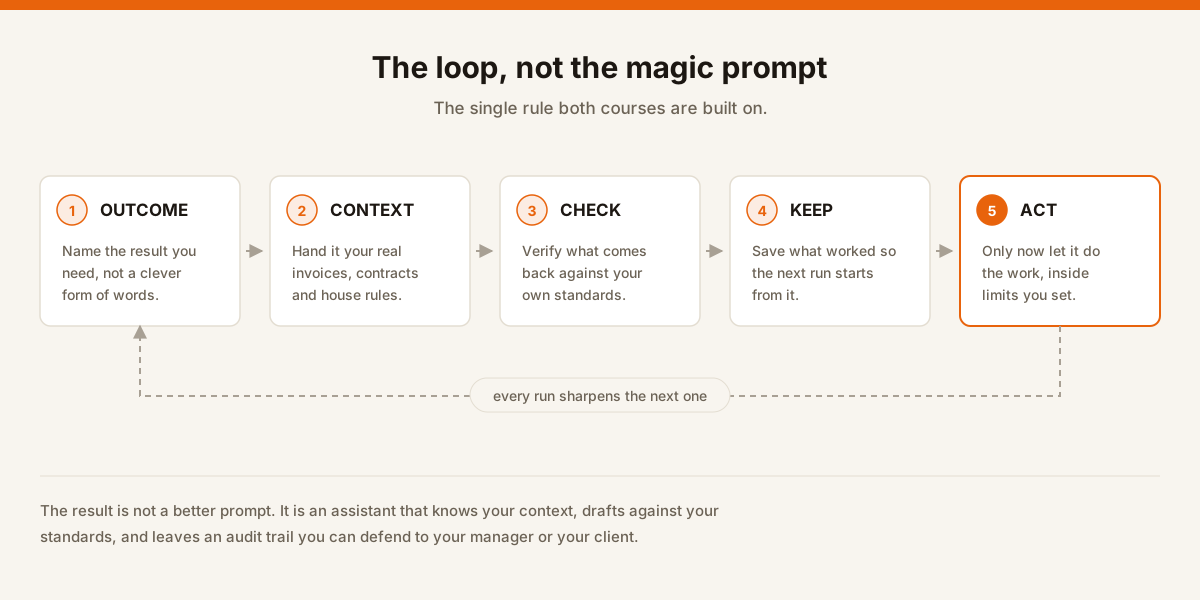 The five-step loop both Praxismith courses are built on
When you work this way, the AI stops being a chat toy. It becomes an assistant that knows your context, drafts against your house standards, checks its own work against your rules, and leaves you with an audit trail you can defend to your manager or your client.
What Praxismith Is
Praxismith is two self-paced courses, 28 modules, and 32 runnable prompts that you can test and adapt directly on your screen:
-
Course I: Working With AI (12 lessons) takes you from typing raw questions into a box to building a personal operating system that handles your documents, communications, and recurring tasks.
-
Course II: Working With AI Agents (16 lessons) is for builders and operators who want to move from AI that answers to AI that acts, covering sandboxes, tools, deterministic gates, and knowing when not to let an agent run unsupervised.
Everything is written in clear Indian English. The examples are the problems people actually deal with here: responding to client disputes on WhatsApp, cross-checking tax invoices, rewriting corporate circulars, and screening candidates. There are no synthetic case studies and no borrowed Silicon Valley clichés.
How to Try It
You do not need to buy anything to see if this works for you.
The first four lessons of Course I are completely open to read and practise right now. No credit card, no paywall, and no countdown timers.
If you find it useful and want to finish the curriculum, access to the entire course is a one-time fee of ₹1,999 (including GST), roughly what a single month of ChatGPT Plus costs.
You can start lesson one here:
Vibe Coding Survival Guide
How to Ship AI-Assisted Code That Doesn't Embarrass You in Production
A production-minded guide for developers, founders, and teams using AI coding tools without letting brittle generated code reach customers.
If you found this article helpful, consider buying me a coffee to support more content like this.
Related Articles
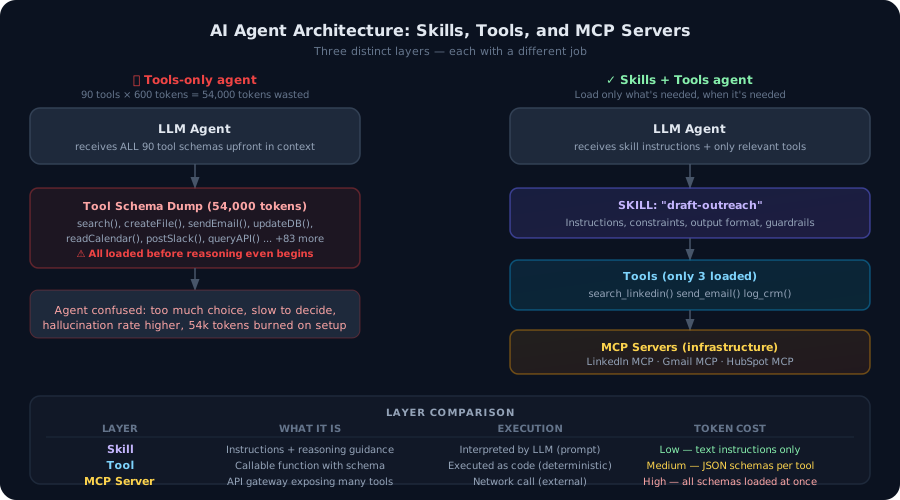
Most developers build agents with tools. That's not enough. Here's the architectural difference between agent tools and agent skills — and why getting this wrong burns tokens, degrades accuracy, and makes your agents brittle in production.
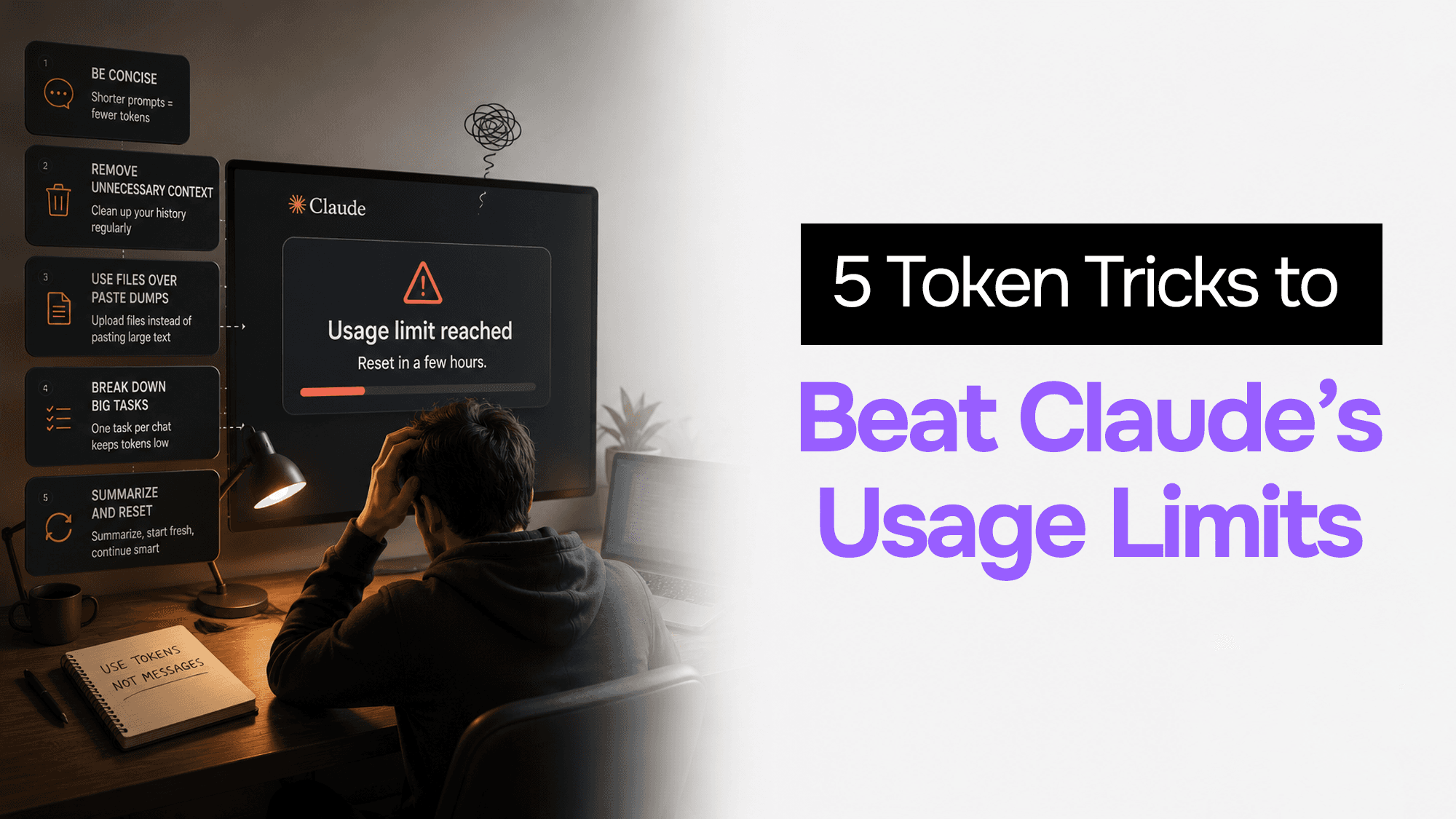
Claude doesn't count messages like ChatGPT — it counts tokens, and one conversation can burn 10x more than another. Here are 5 tricks that cut your token usage by 80% or more.

Feeling frustrated by your AI coding assistant? Learn the 'Architect and the Intern' mental model, a powerful workflow to fix AI hallucinations, boost developer productivity, and master tools like GitHub Copilot and ChatGPT. Stop 'vibe coding' and become the architect of your code.
Vibe Coding Survival Guide
How to Ship AI-Assisted Code That Doesn't Embarrass You in Production
A production-minded guide for developers, founders, and teams using AI coding tools without letting brittle generated code reach customers.