

Blog
Production AI, workflow automation, and full-stack engineering — with practical notes on reliability, security, and performance.
Ship AI features that survive real traffic
Start from the failure modes, choose the smallest architecture that holds up, and instrument the path before you scale it.
Vibe Coding Survival Guide
How to Ship AI-Assisted Code That Doesn't Embarrass You in Production
A production-minded guide for developers, founders, and teams using AI coding tools without letting brittle generated code reach customers.
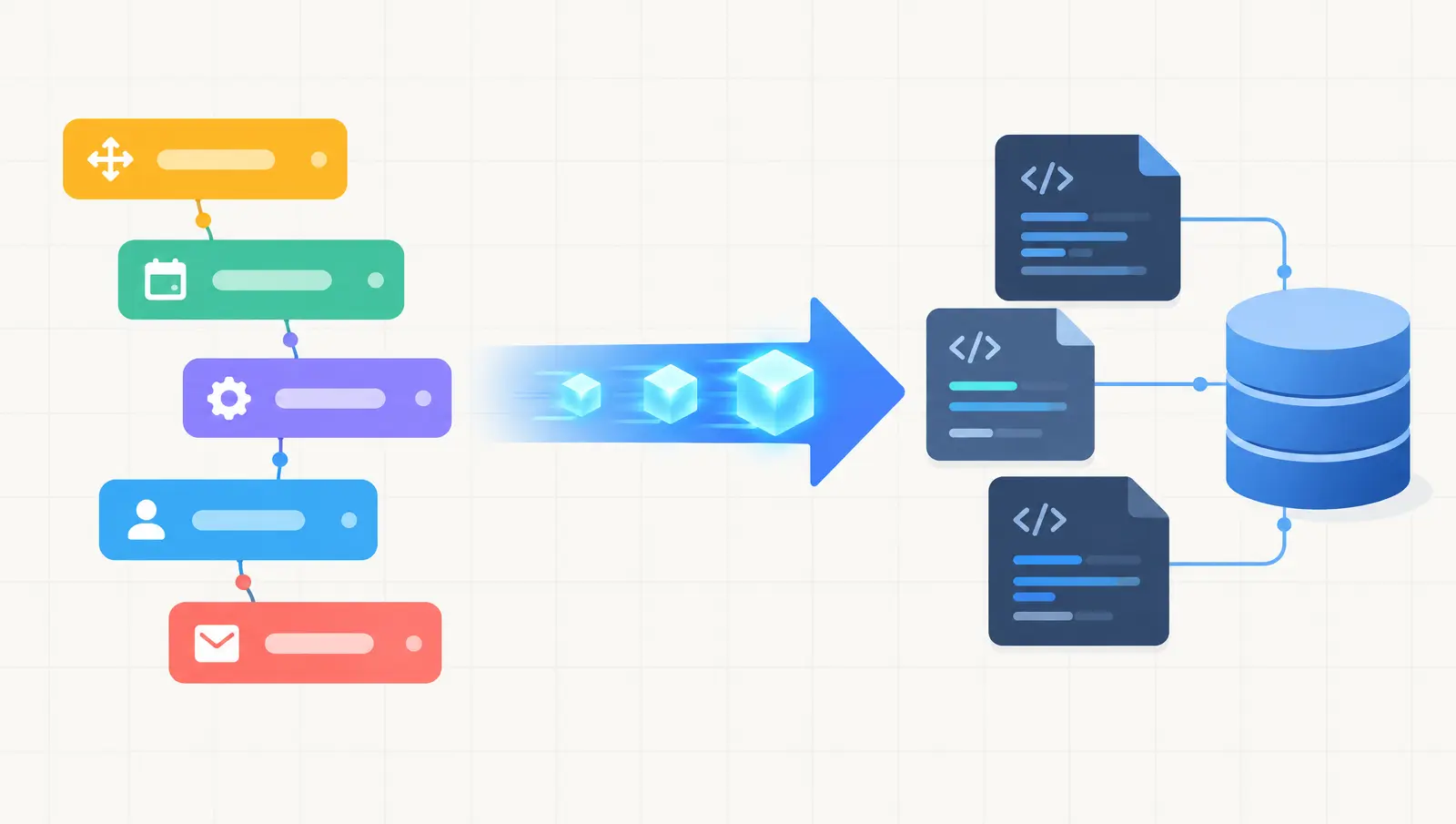
Thinking of moving a Bubble app to Next.js? Here is when it makes sense, the migration steps, what drives cost and timeline, and the risks to plan for.
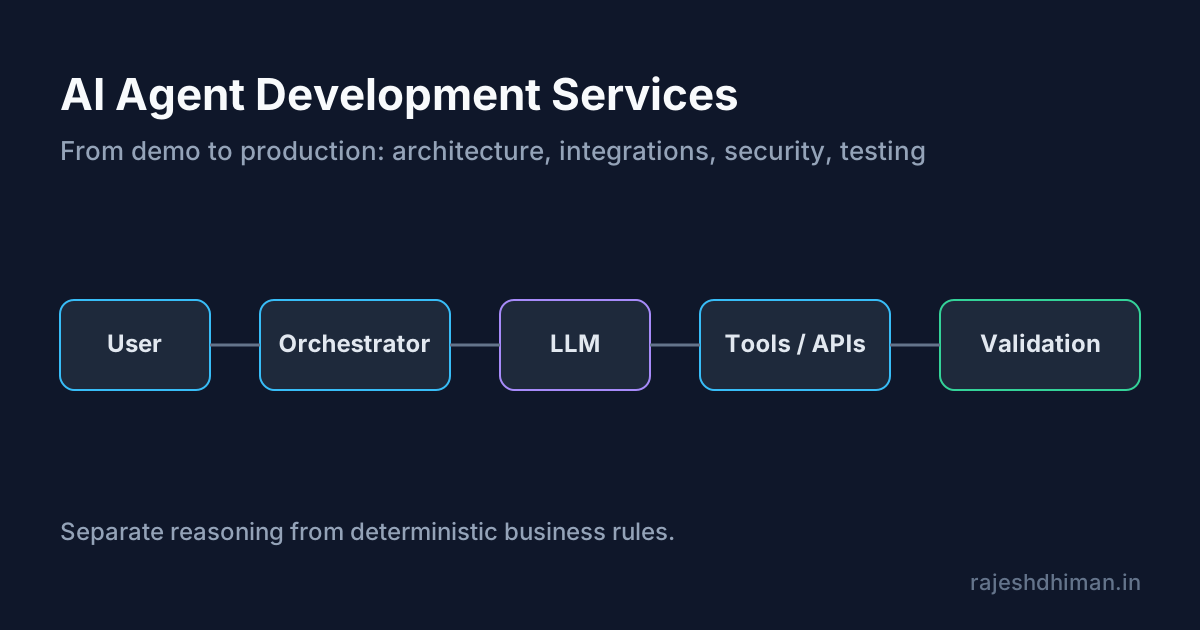
Explore AI agent development services for building reliable, production-ready AI agents. Learn about architecture, integrations, security, testing, deployment, and costs.
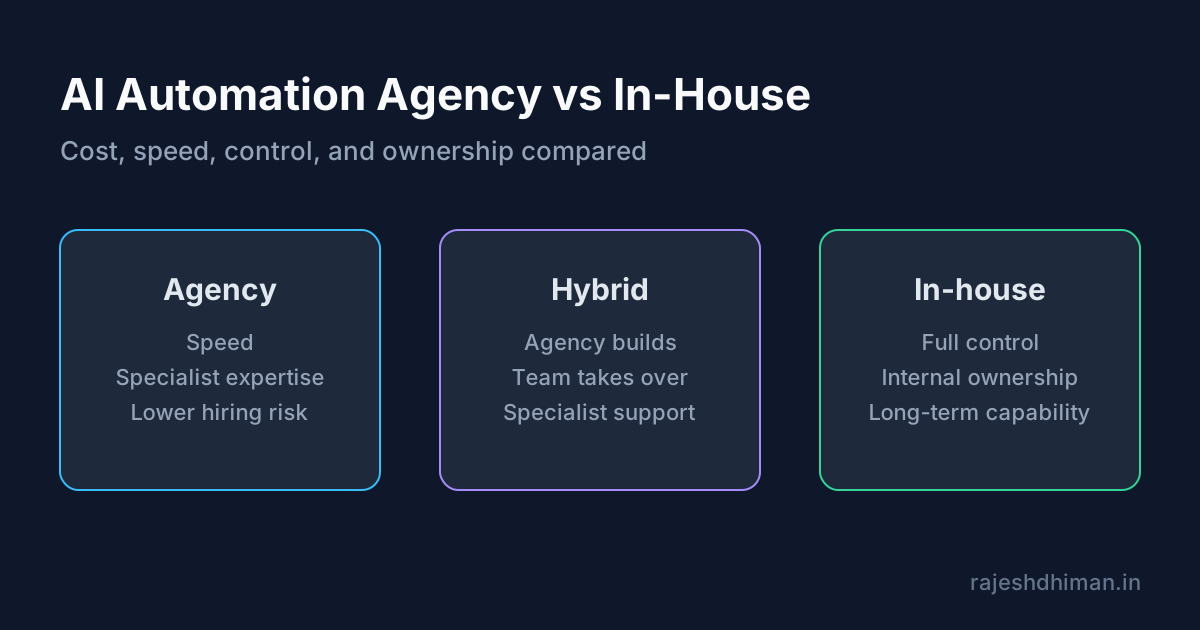
Compare an AI automation agency with in-house development. Learn about costs, services, benefits, risks, timelines, and how to choose the right approach.

Cursor Auto picks a model for you. Here is what Cursor documents about how it chooses, what it costs, and when to pick a model yourself instead.
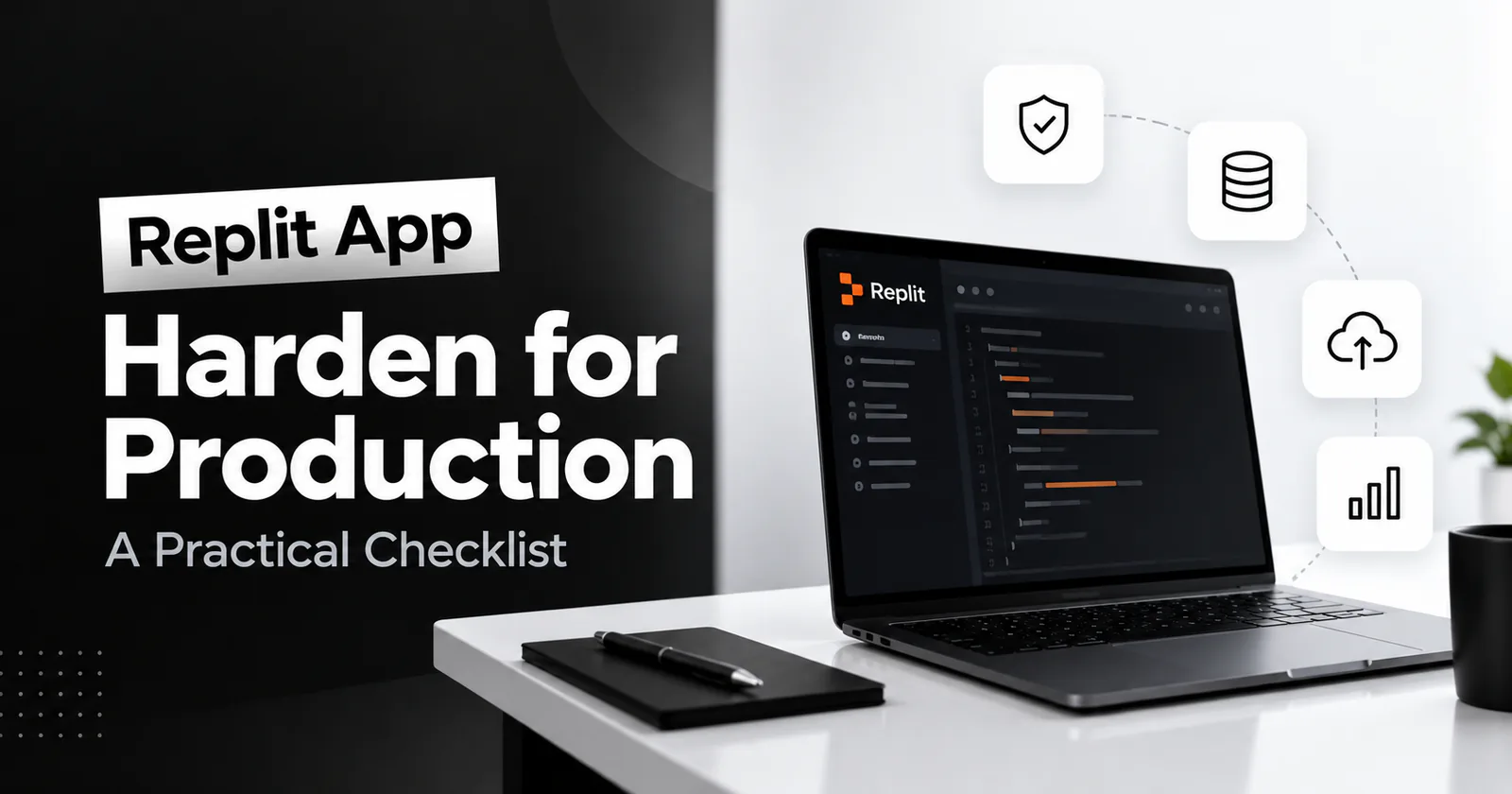
Harden a Replit app for production: a checklist covering authentication, secrets, database separation, deployment type, backups and monitoring before launch.
The security requirements for deploying autonomous AI agents in production: identity, least privilege, prompt injection defenses, human approval, audit logs, and more, mapped to OWASP and NIST guidance.
The eight metrics to track after implementing AI workflow automation, how to measure each one, and how to turn them into a payback number your team trusts.
A founder's checklist for hiring an AI code rescue consultant in India: the skills that matter, DPDP Act data handling, questions to ask, and red flags in proposals.
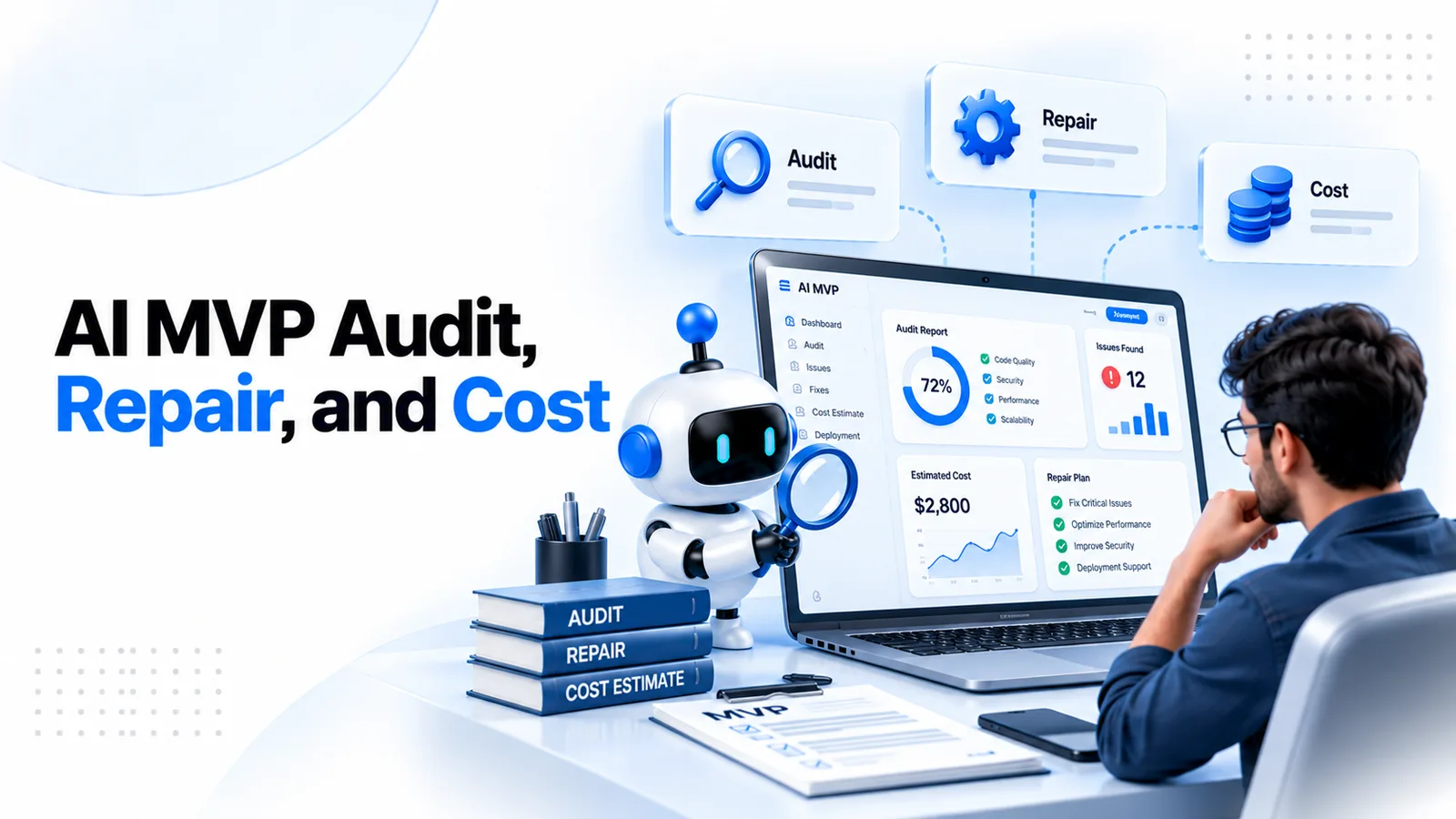
What it costs to audit and fix a broken AI MVP in 2026: a 3-day audit, a targeted fix, a 14-day reliability sprint, or a rebuild, plus what drives the price up or down.

A hiring scorecard for choosing an AI engineer to build production agents with human fallbacks: what to weigh, questions to ask, and red flags that predict a fragile demo.
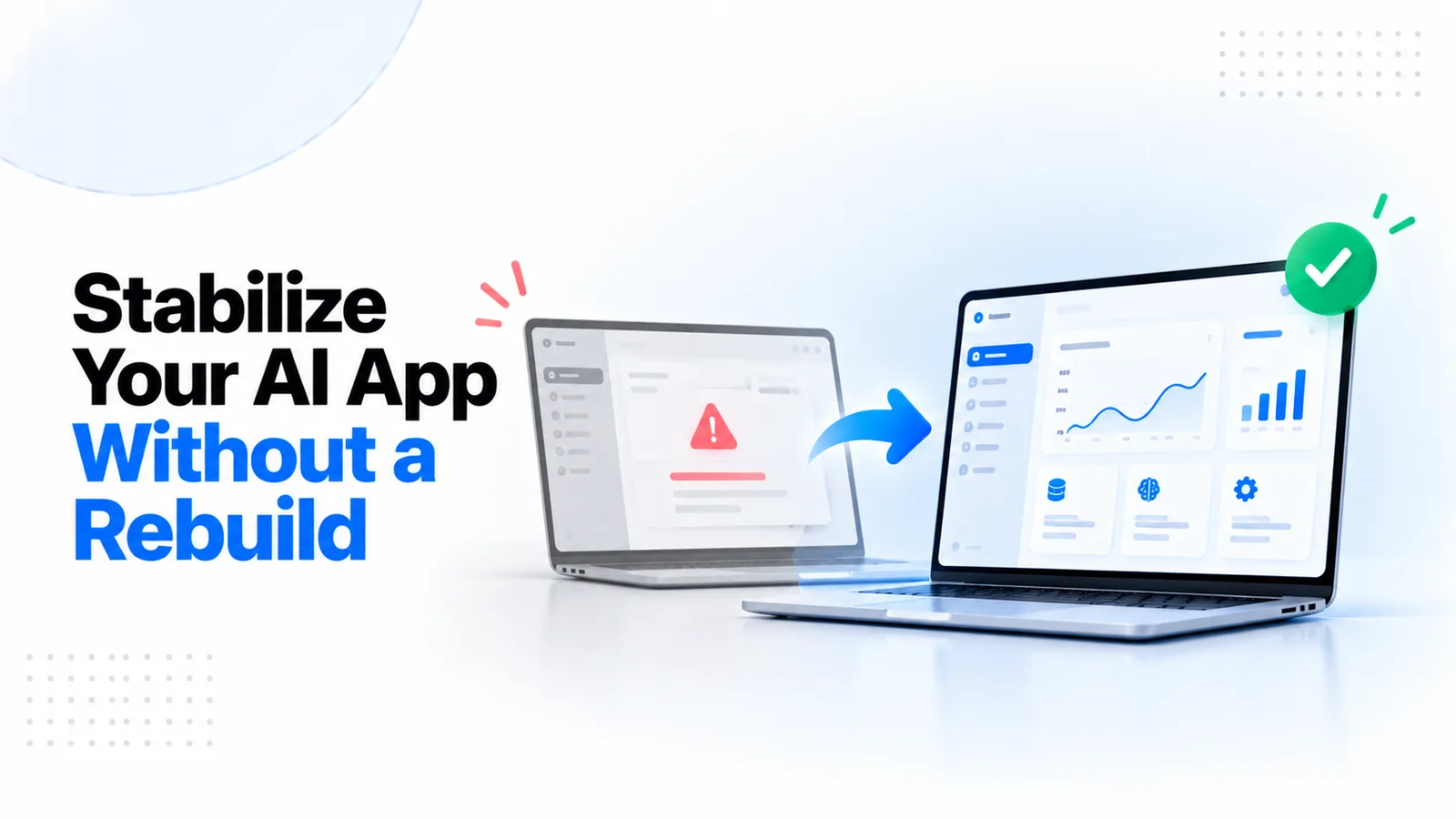
How to choose an engineer who will stabilize your AI application instead of rewriting it: what to look for, questions to ask, and how to spot someone whose first instinct is a rebuild.
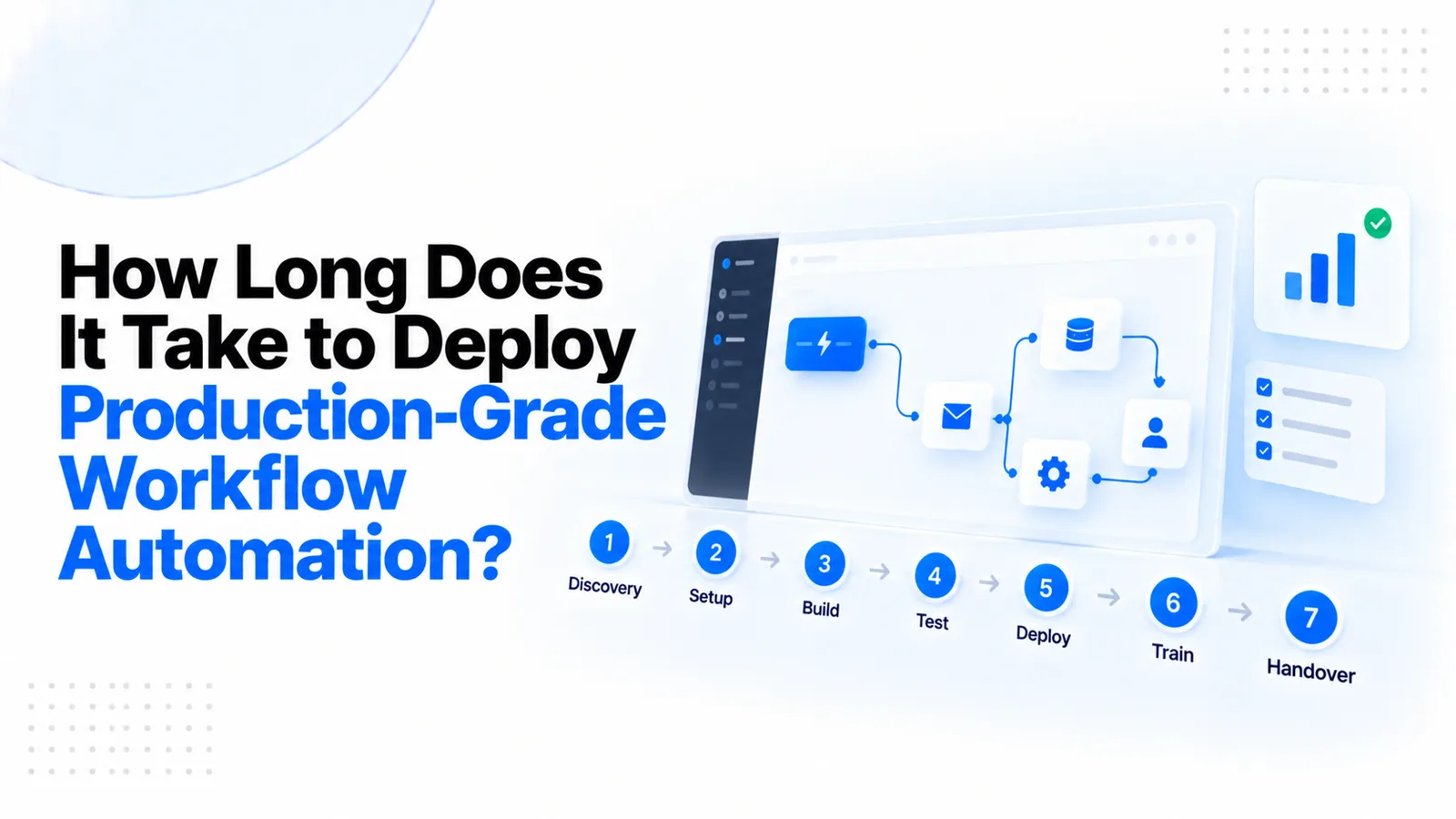
A realistic timeline for deploying production-grade AI workflow automation: 10 days for two well-scoped workflows, longer for multi-system integrations, and what adds weeks.
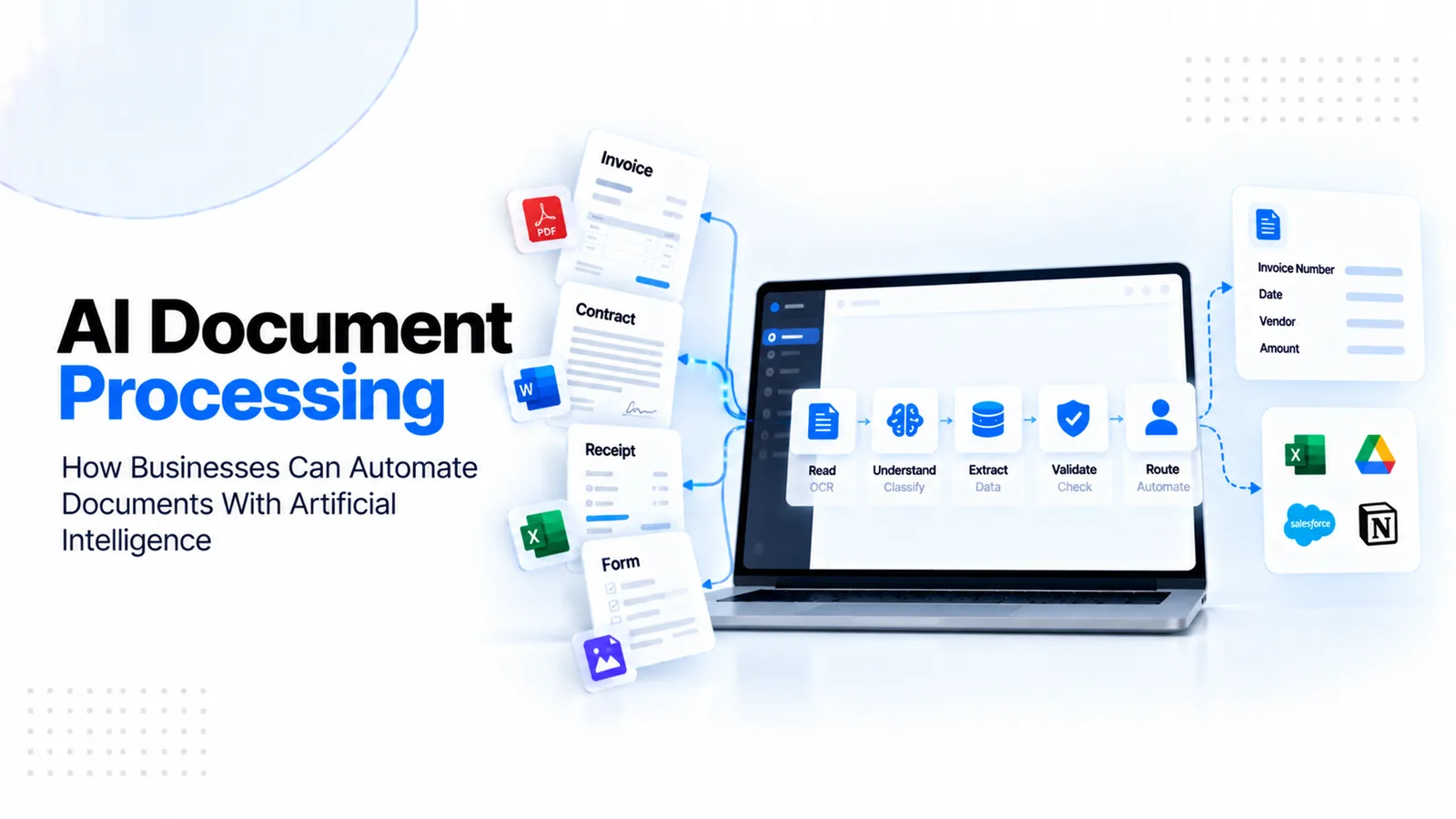
Learn how AI document processing automates data extraction, document classification, verification, and workflows while reducing manual errors and processing time.

Calculate AI workflow ROI with volume, review time, exceptions, and governance costs, not vague productivity claims. Copyable model and payback math.
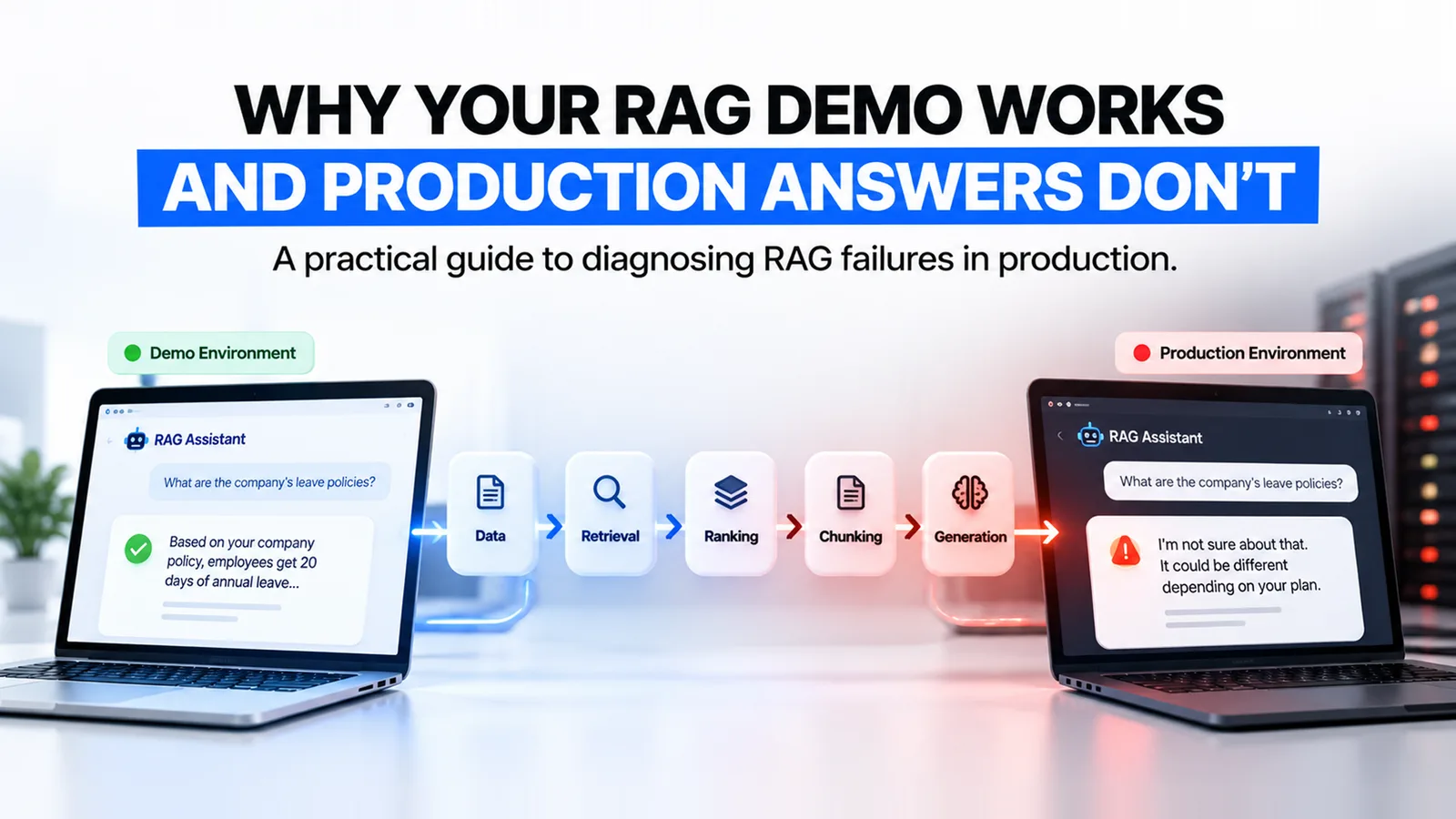
Your RAG demo worked. Production answers are wrong or empty. Separate retrieval, ranking, chunking, freshness, and generation. Know when to rescue.
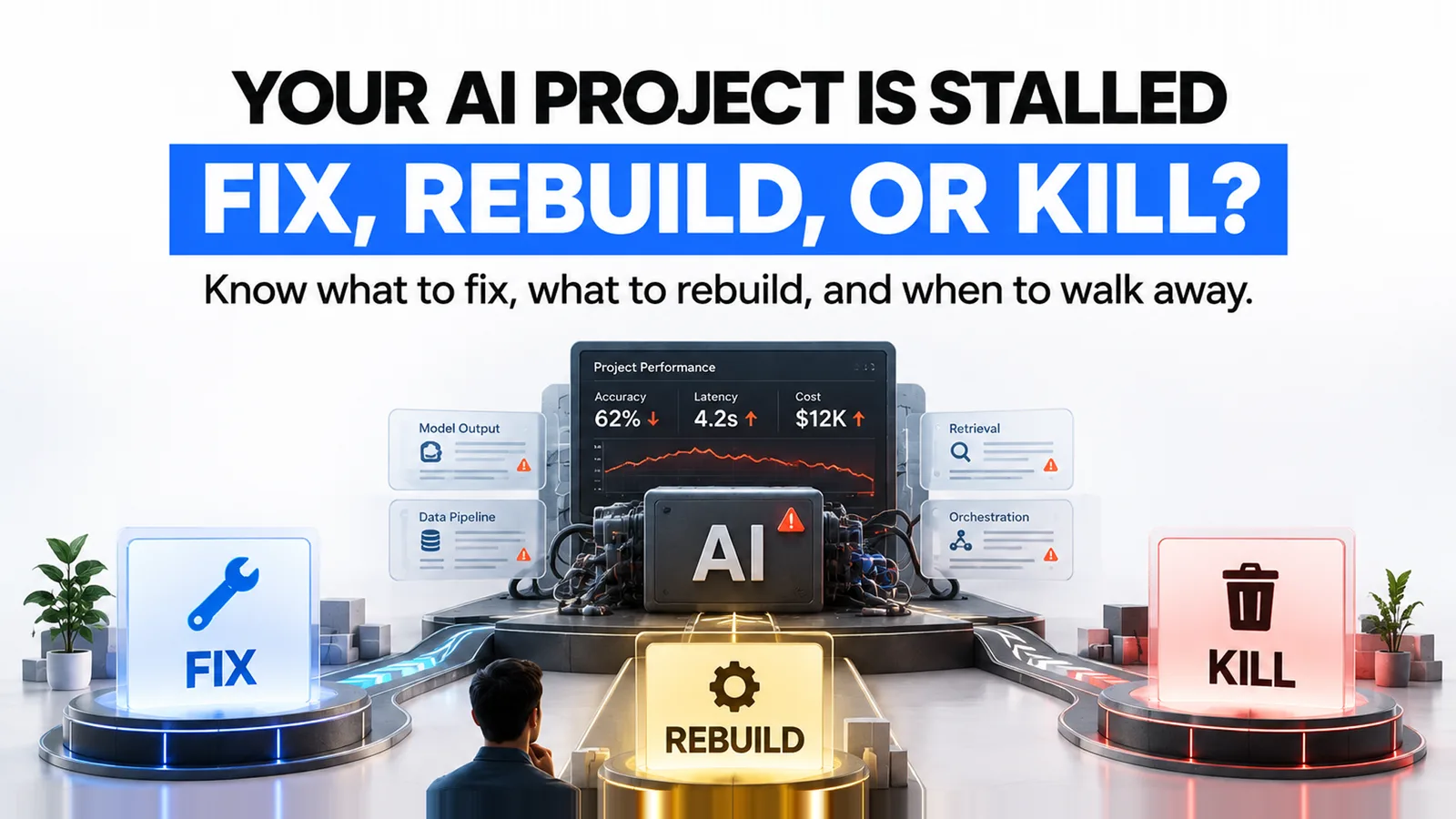
Six months in and stuck? Separate plumbing from architecture from unwanted outcomes, then set a checkpoint before another quarter burns.
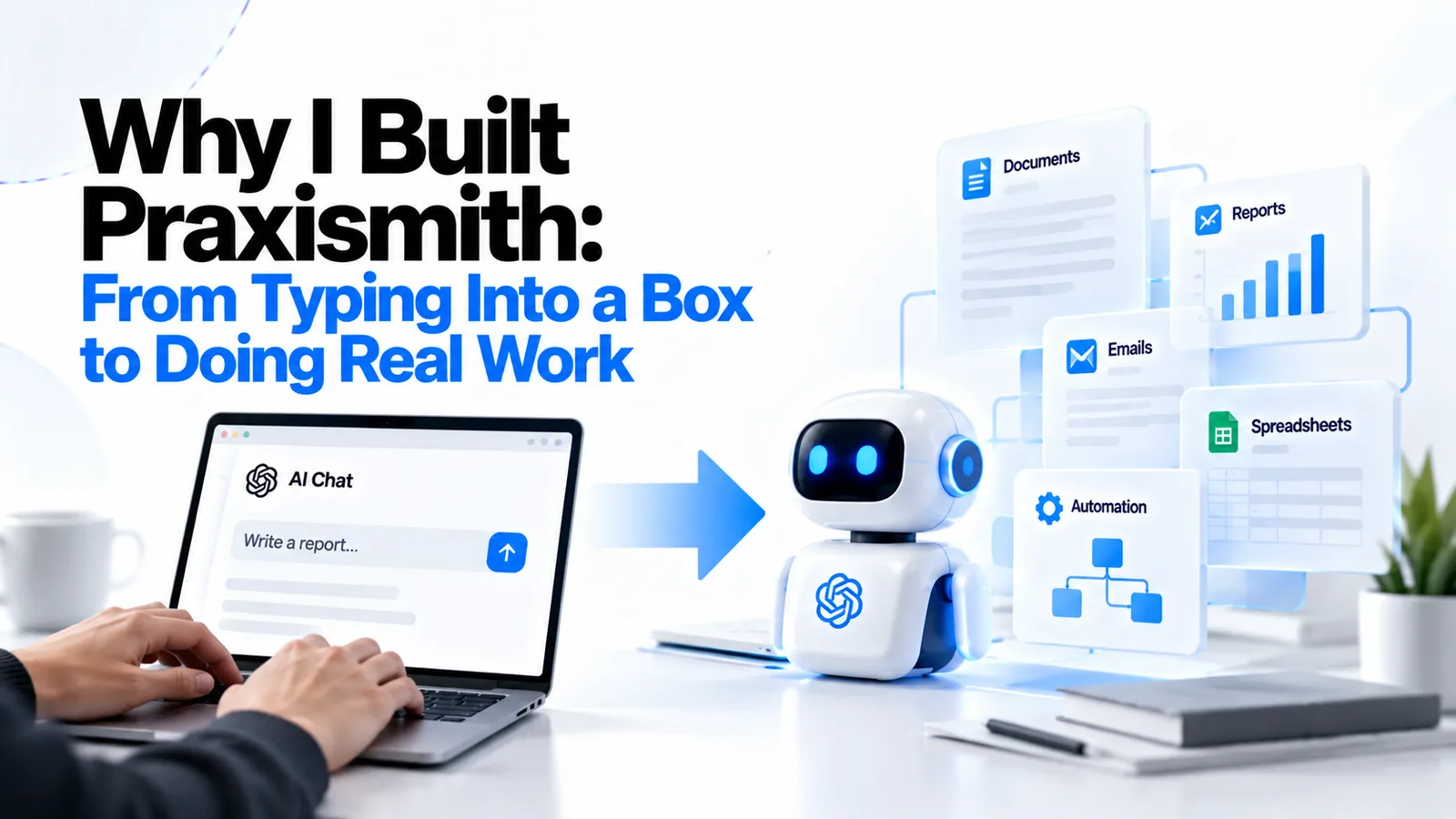
Most AI courses teach clever prompts. Real jobs run on messy GST invoices, vendor contracts, and WhatsApp threads with actual consequences. Here's why I built Praxismith: two courses on turning fragile AI chats into systems you can defend to your manager.
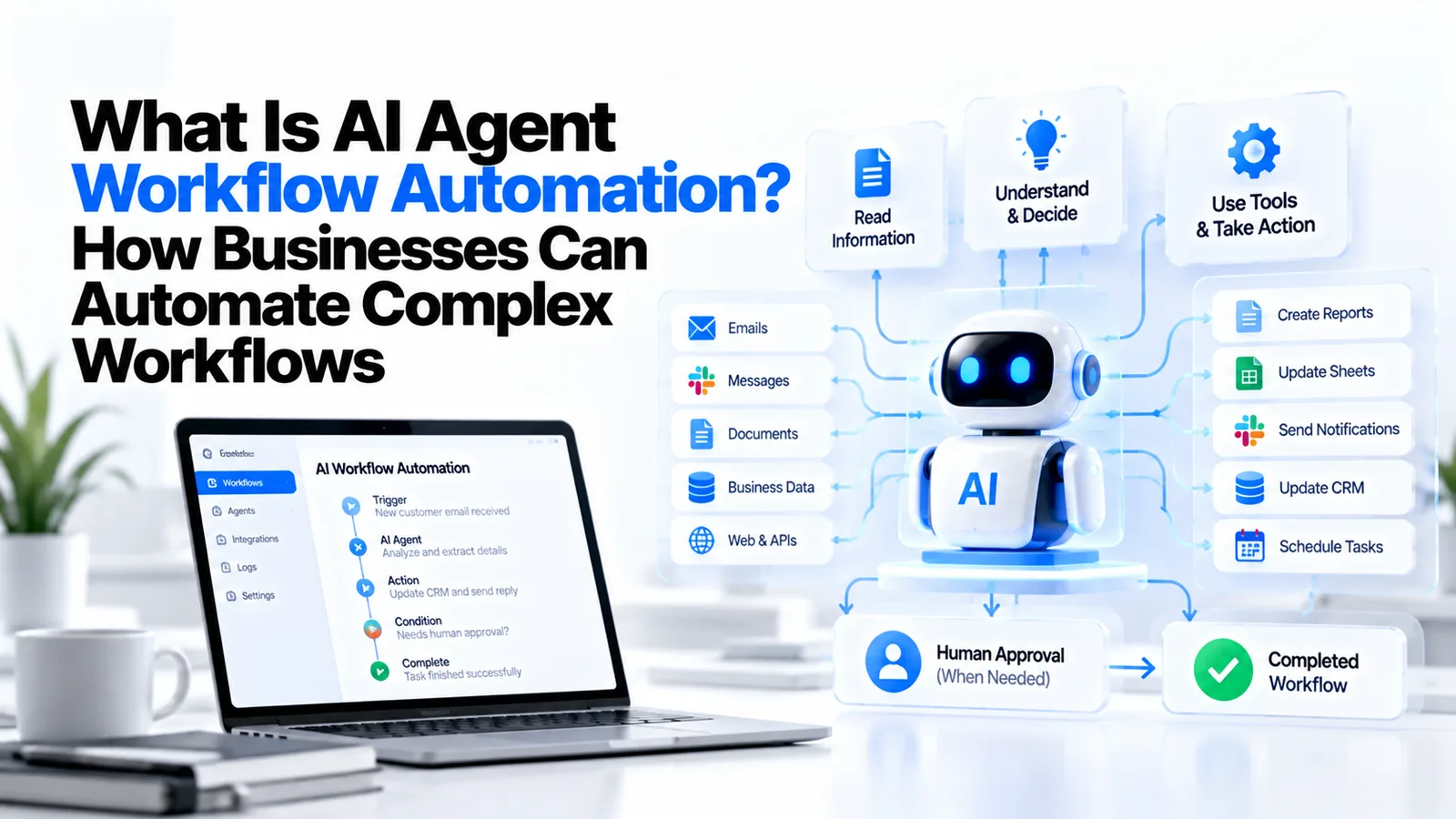
AI workflow automation uses AI agents to automate multi-step business processes that traditional automation can't handle. Learn how it works, where it adds value, and how to build it.
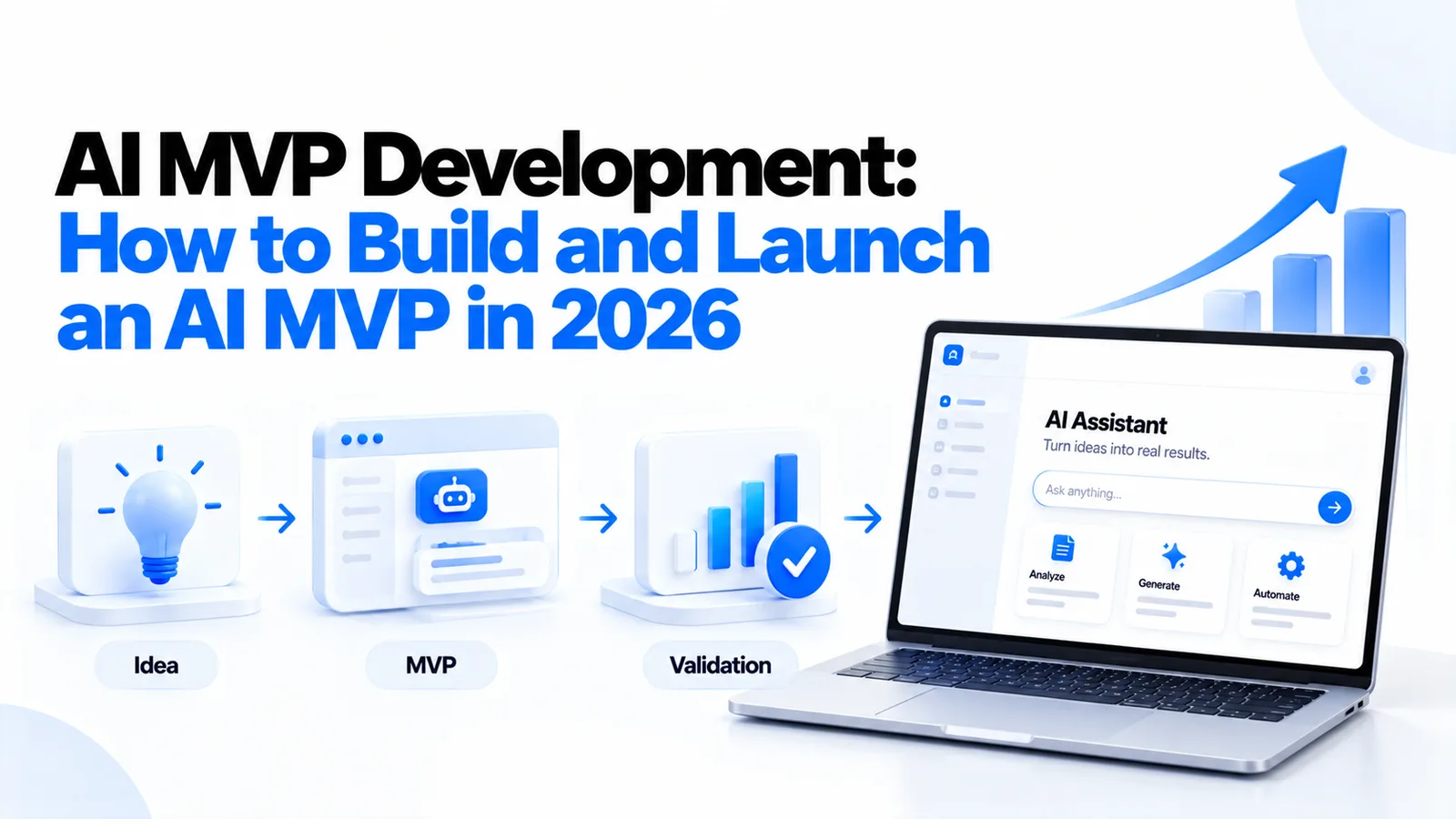
How to build an AI MVP that actually works — the 9-step process, real cost ranges, tech stack decisions, and the build vs. buy choices that determine whether your AI product ships in 8 weeks or 8 months.
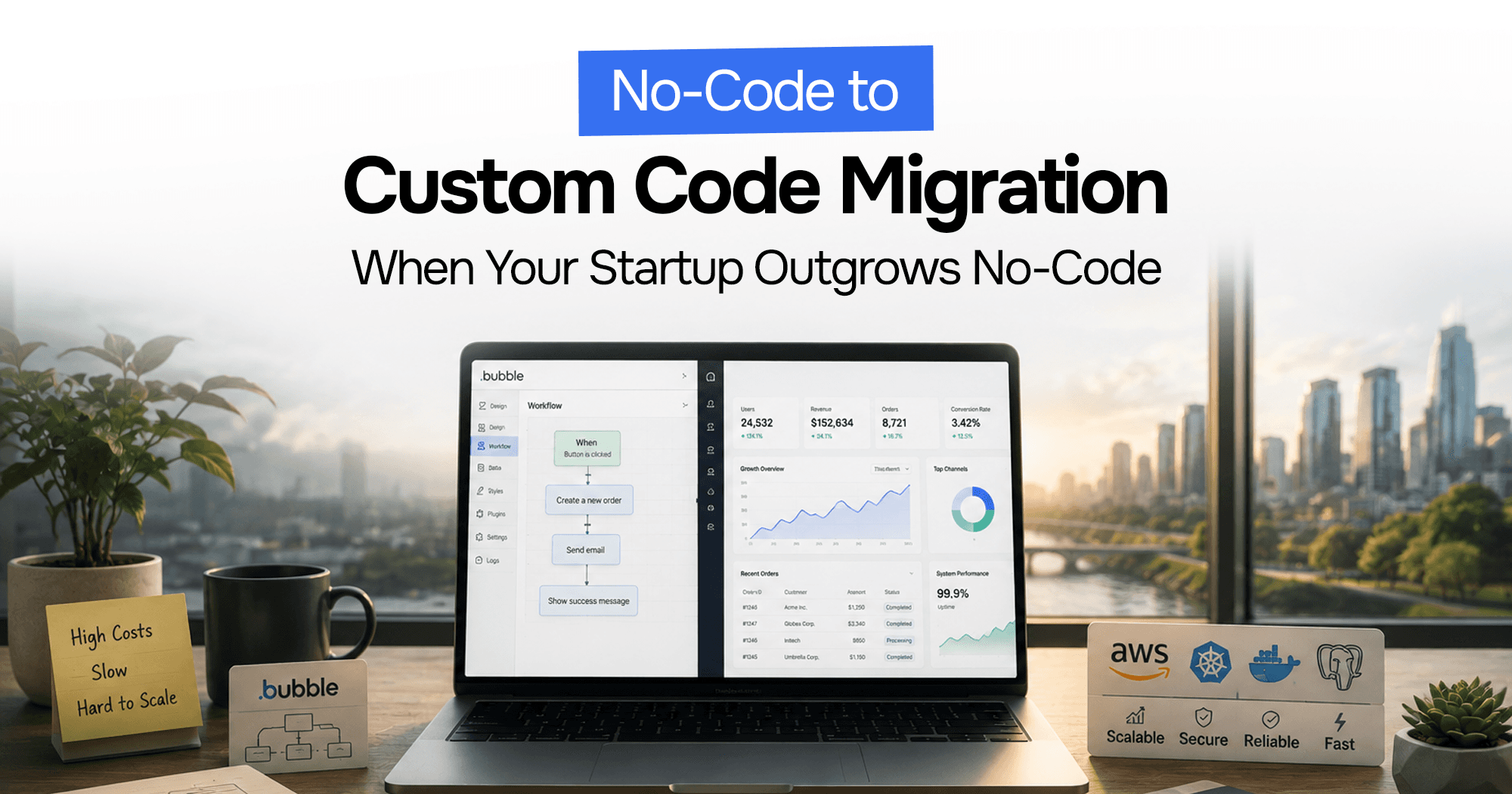
Your Bubble.io app is hitting walls — slow queries, $10K/month bills, investors asking for a real codebase. Here's the complete process for migrating from no-code to custom code without losing data or going dark.
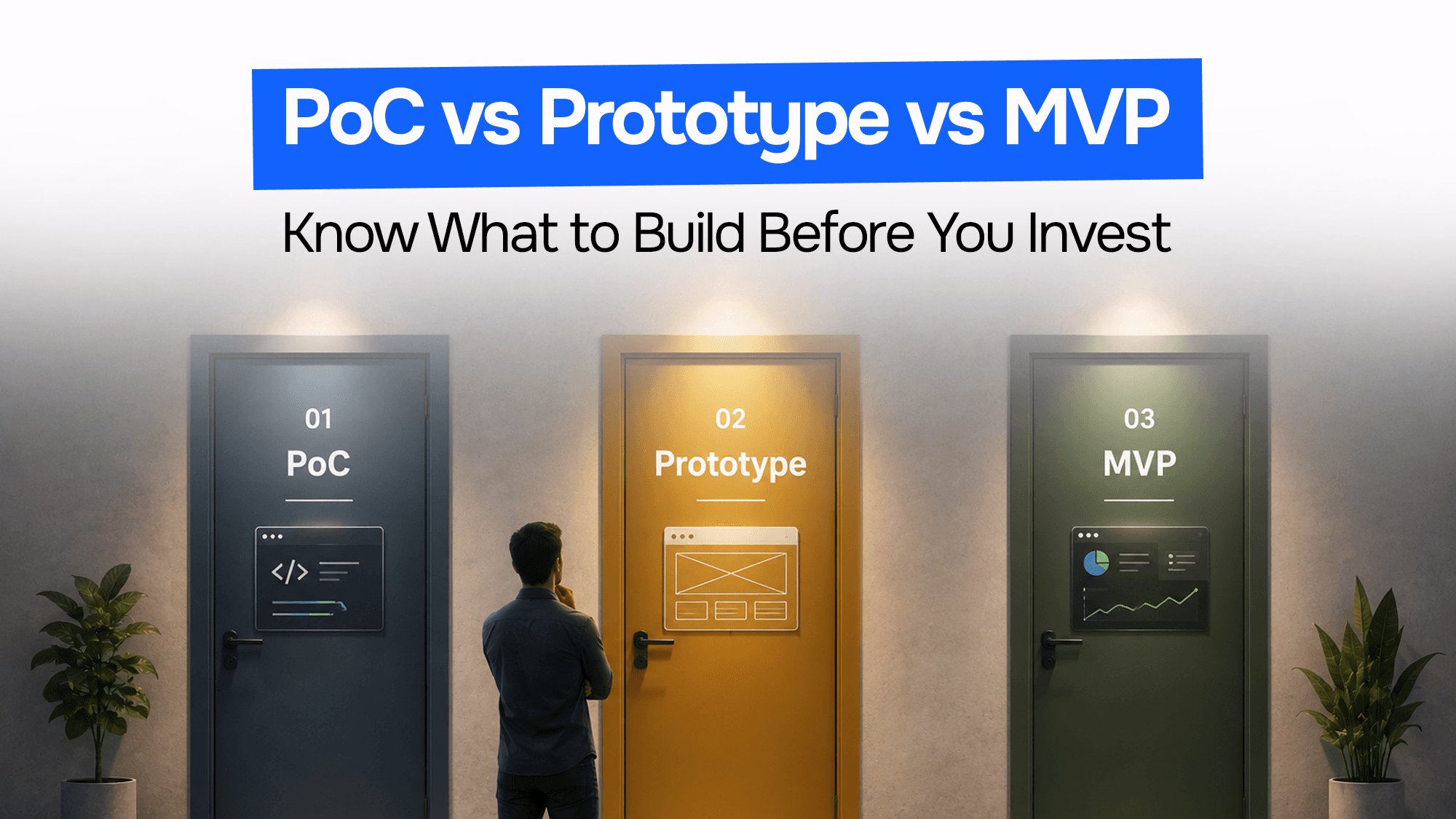
Confused about PoC vs prototype vs MVP? Learn the key differences, costs, timelines, use cases, and when to build each for your startup or software product.

Looking for an MVP app development company? Learn how to evaluate services, technical expertise, cost, timelines, and startup fit before choosing a partner.
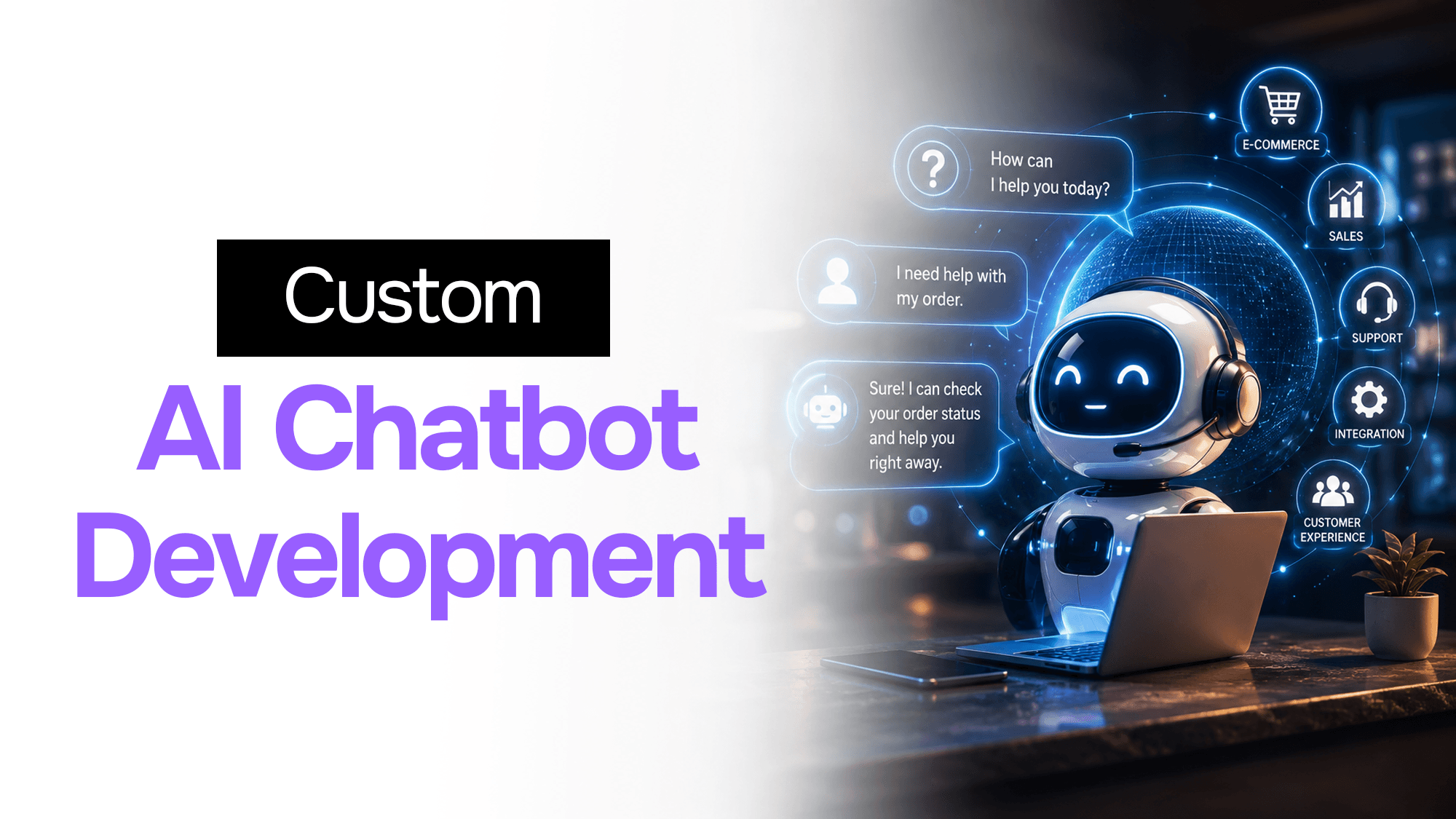
AI chatbot development services explained: how they work, rule-based vs AI, cost, ecommerce use cases, and how to choose the right development partner.

MVP software development services explained: the process, cost, timelines, FinTech MVPs, post-launch support, and how to choose the right development partner.
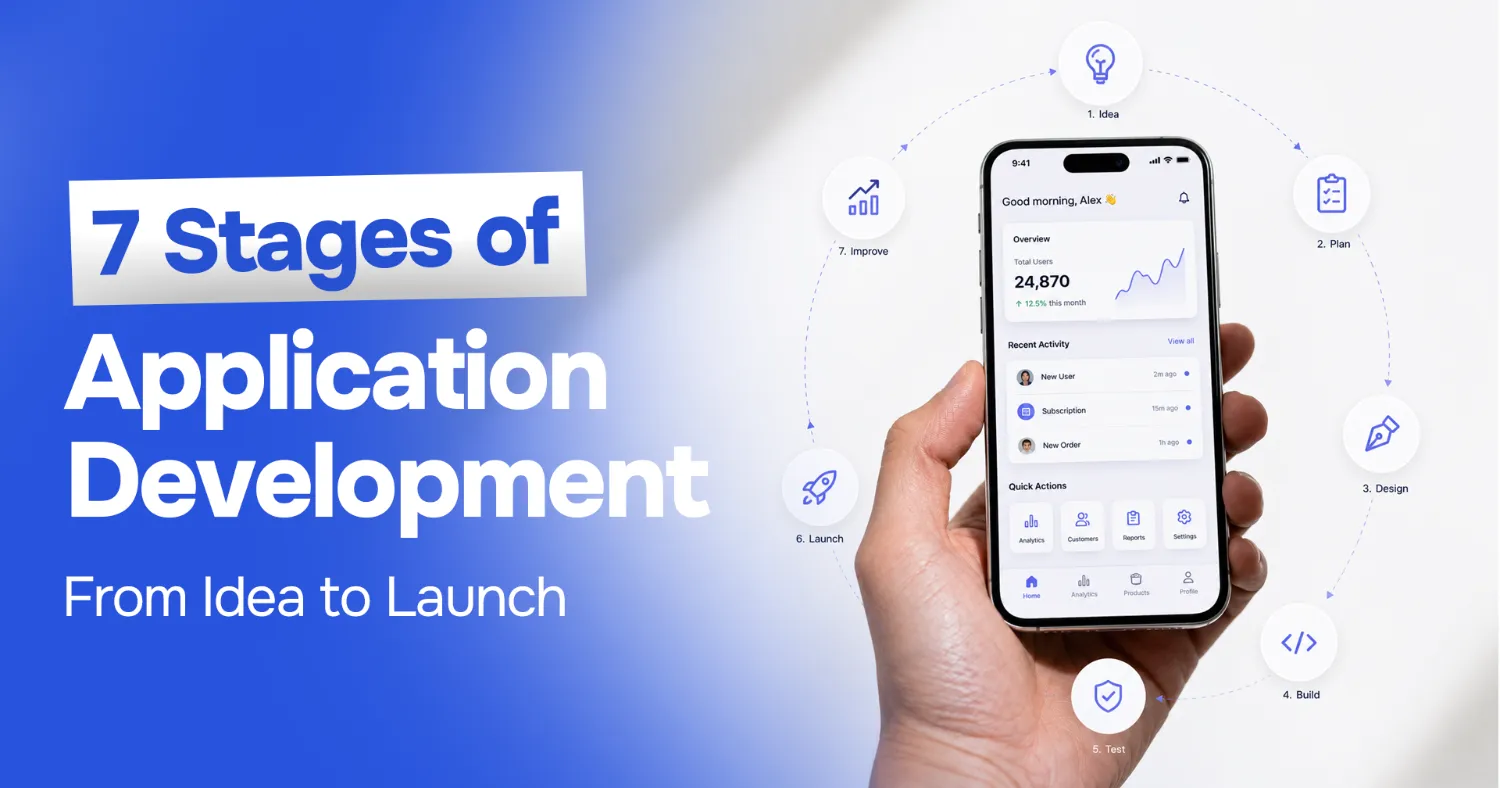
Learn what the 7 stages of app development are, the complete app development process, timelines, lifecycle, and how AI tools like Copilot improve development.
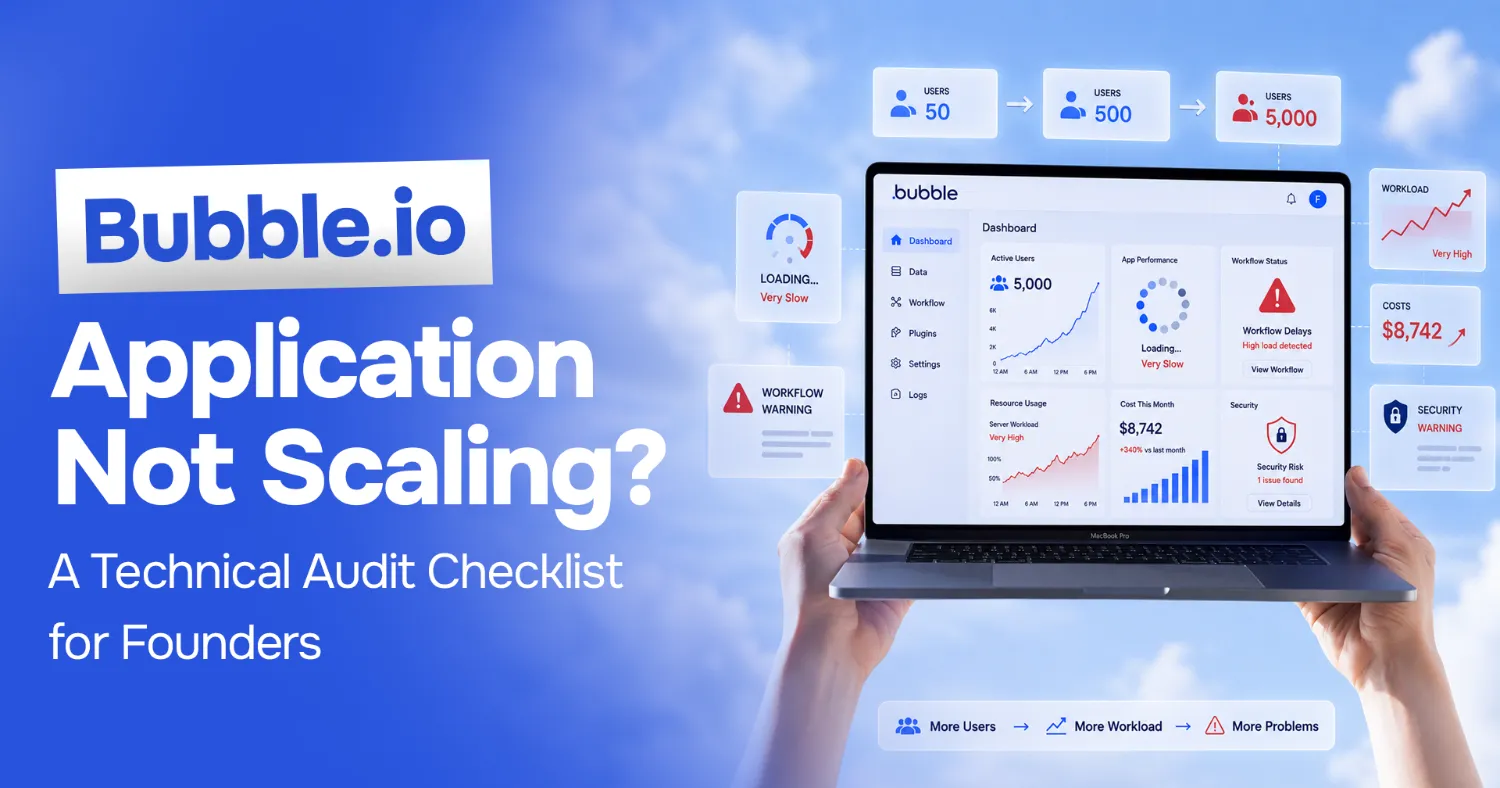
A practical checklist for auditing a struggling Bubble.io app, performance, data structure, workflows, and when it's time to move off Bubble entirely.

Most developers build agents with tools. That's not enough. Here's the architectural difference between agent tools and agent skills — and why getting this wrong burns tokens, degrades accuracy, and makes your agents brittle in production.

Claude doesn't count messages like ChatGPT — it counts tokens, and one conversation can burn 10x more than another. Here are 5 tricks that cut your token usage by 80% or more.

How I scope, design, build, and hand off client marketing sites in Webflow — including the exact process, tools, and handoff checklist I've refined over dozens of projects.
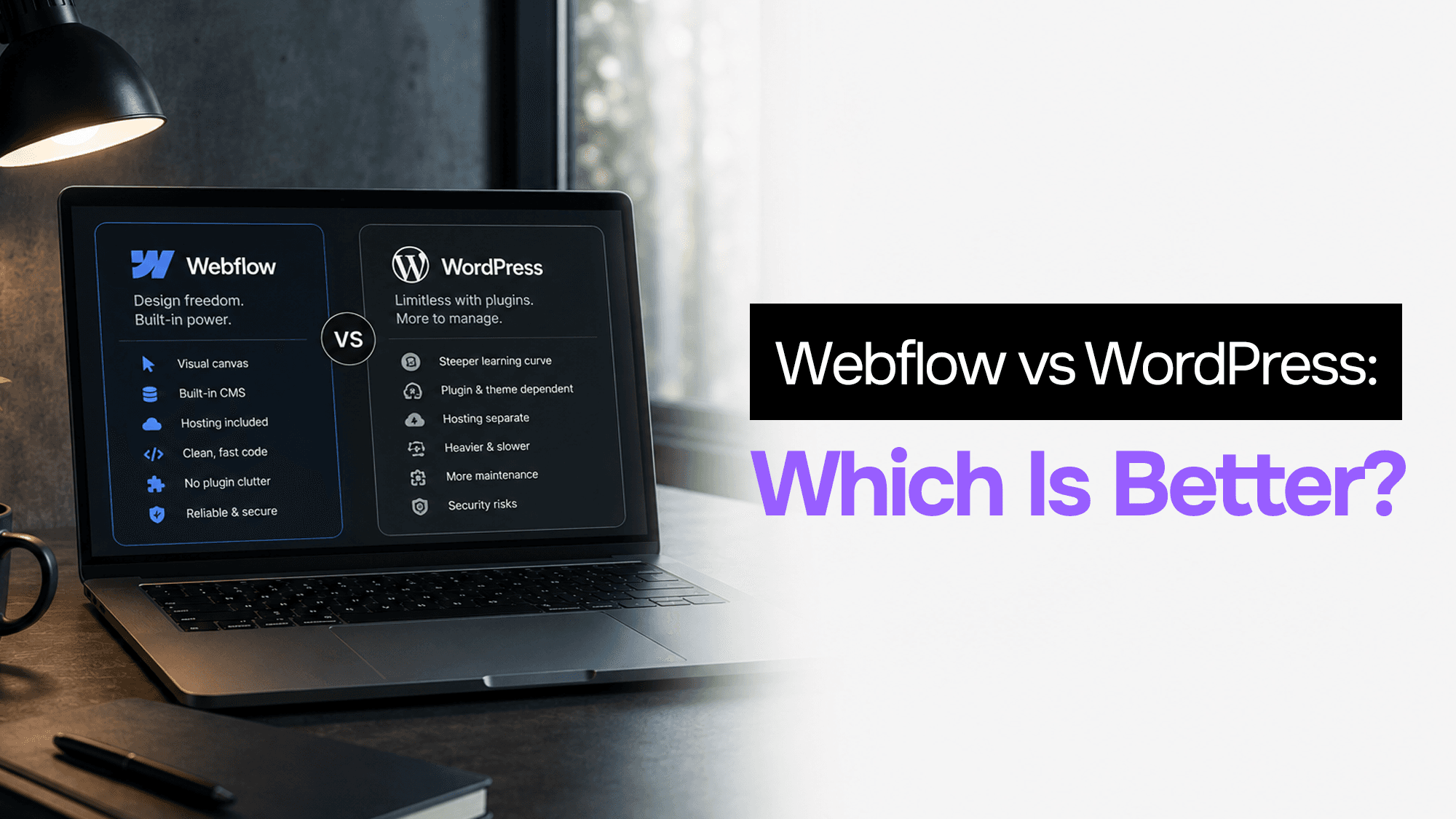
WordPress still powers 43% of the web. Webflow is growing fast. After building client projects in both, here's what actually matters when choosing between them in 2026.

The economics that made your demo cheap fall apart at scale. Context window bloat, wrong model for the task, and zero caching are costing you 60–90% more than necessary. Here are five levers — with Node.js code — to cut your LLM bill without touching your output quality.
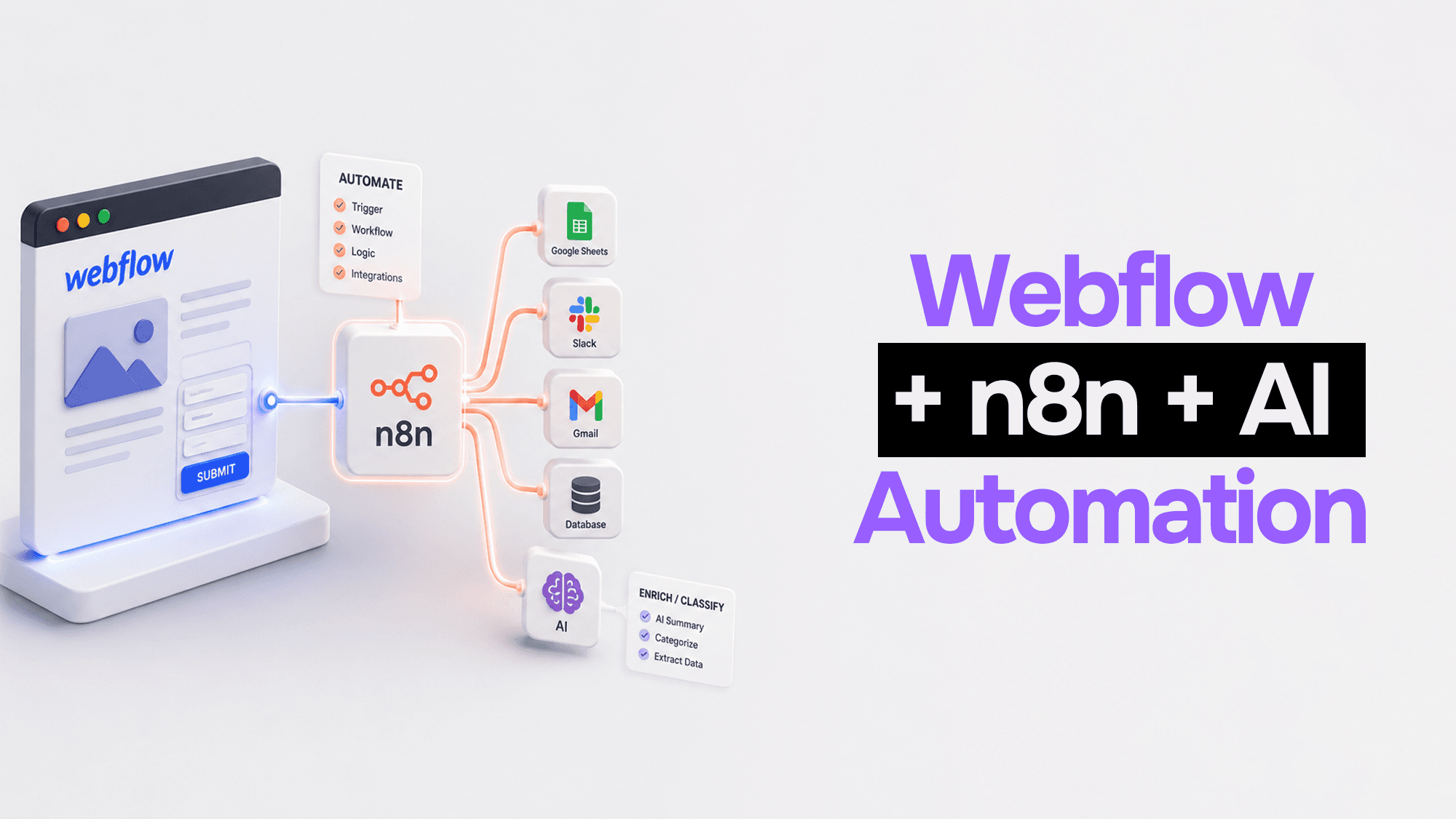
Webflow handles your frontend beautifully. n8n handles the logic. Claude handles the intelligence. Here's how to wire them together into automation pipelines that actually work.
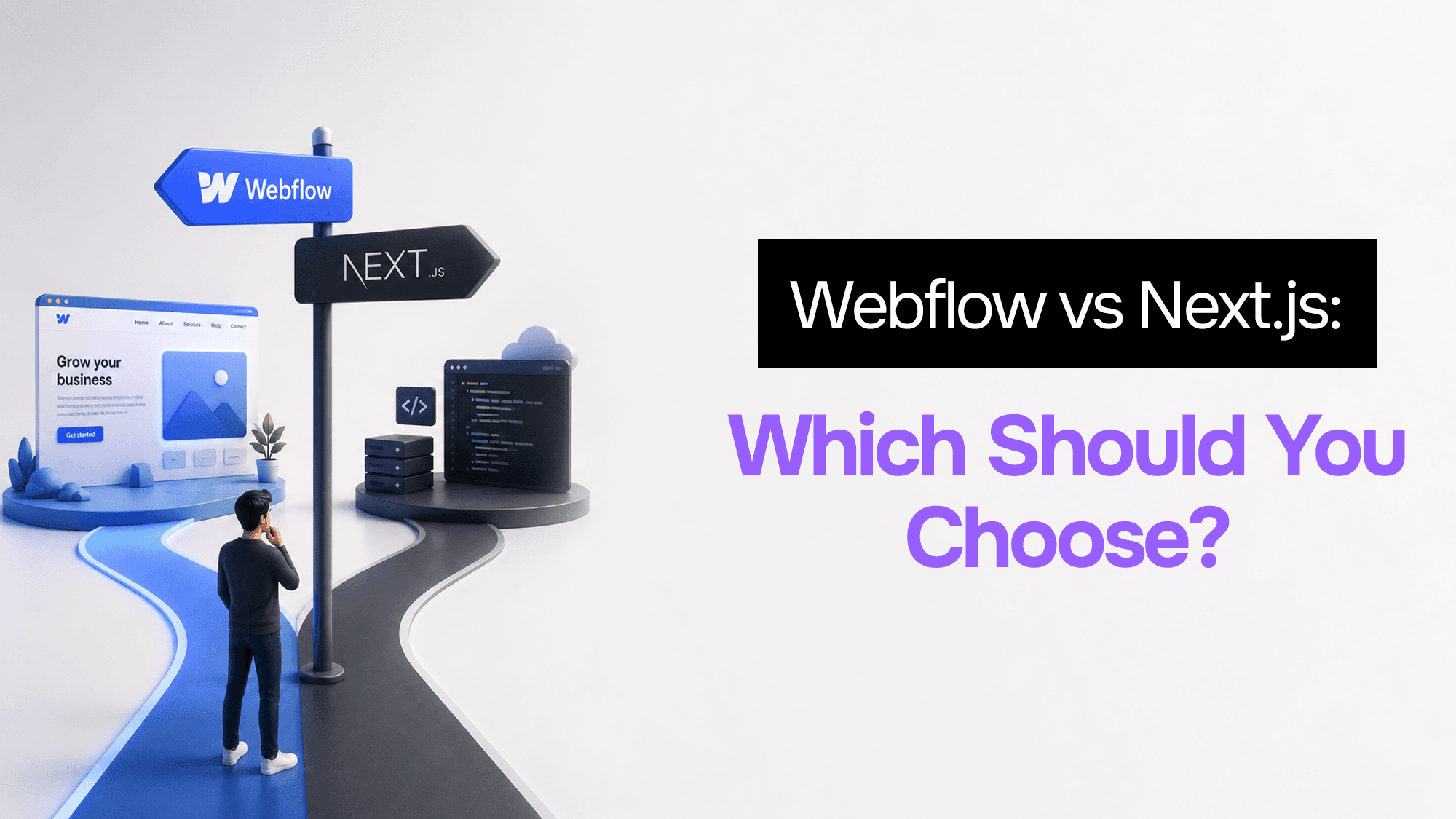
After building dozens of client projects in both, here's the exact framework I use to pick between Webflow and Next.js — and why the answer is almost never obvious.
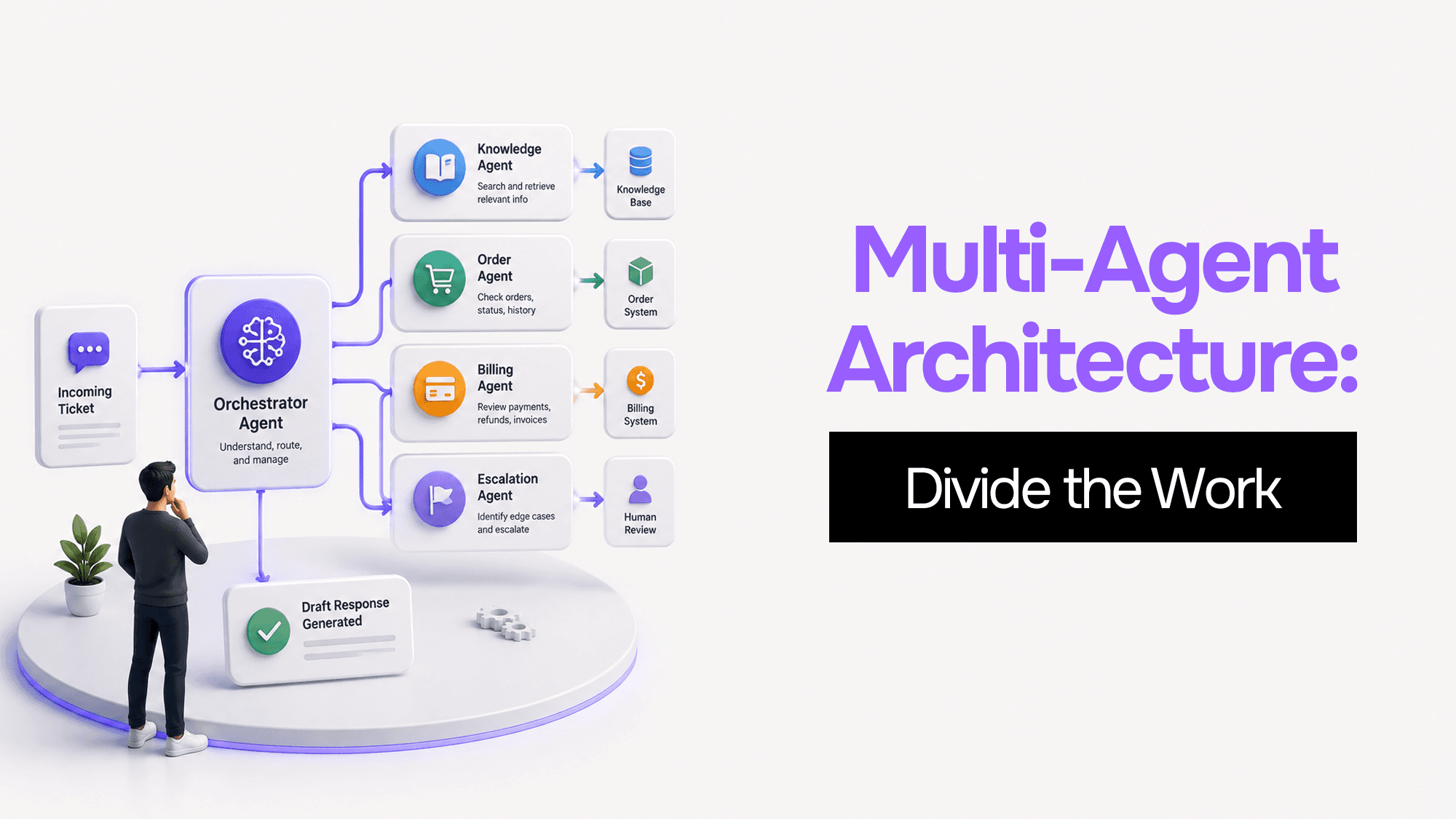
You built one AI agent and it worked. Then it got slower, started forgetting things, and ended up with access to databases it shouldn't touch. Here's what's actually happening — and four coordination patterns to fix it.
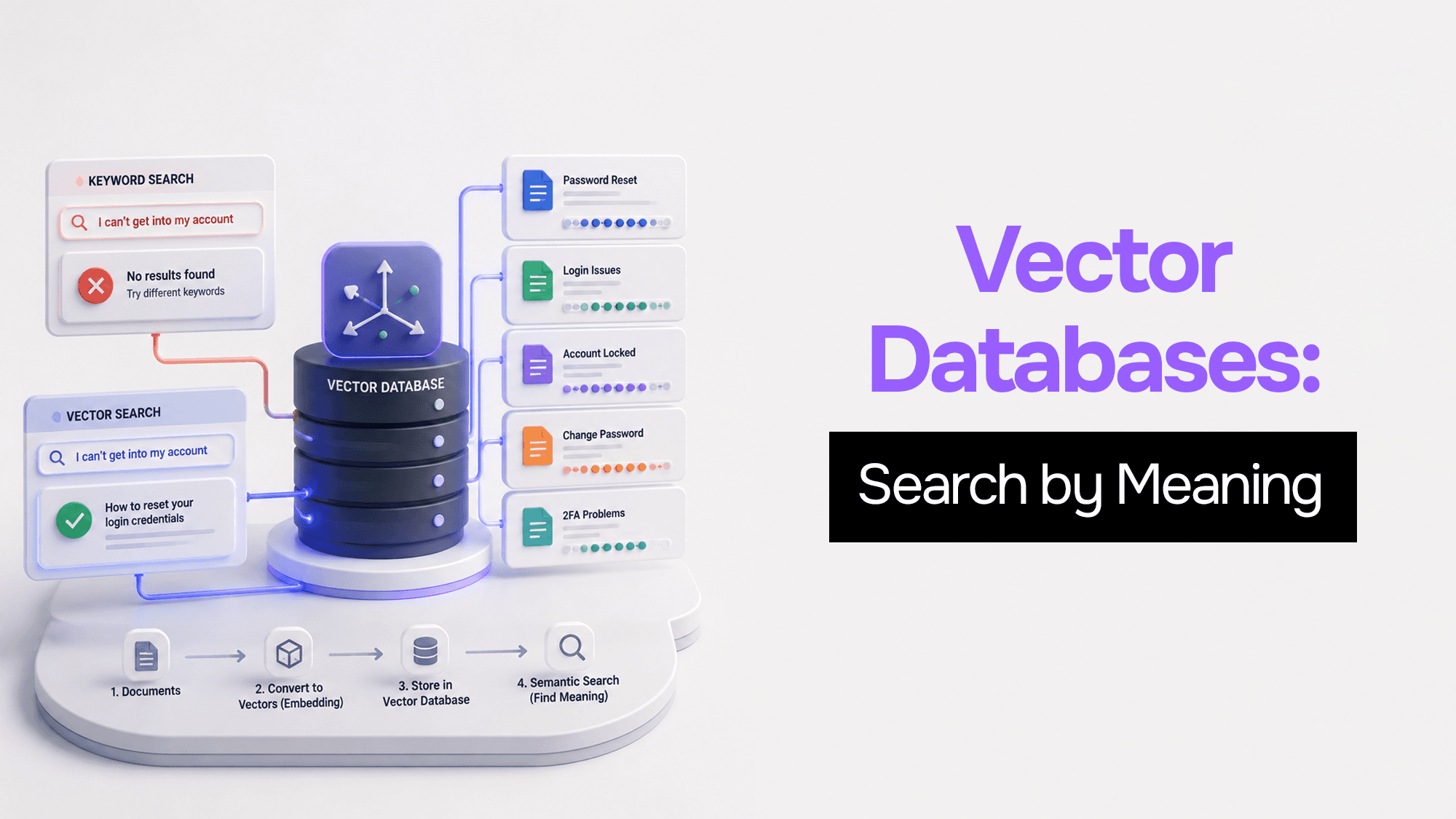
Your regular database can't handle meaning — only words. Here's what vector databases actually do, how HNSW works, and when to use one in your stack.
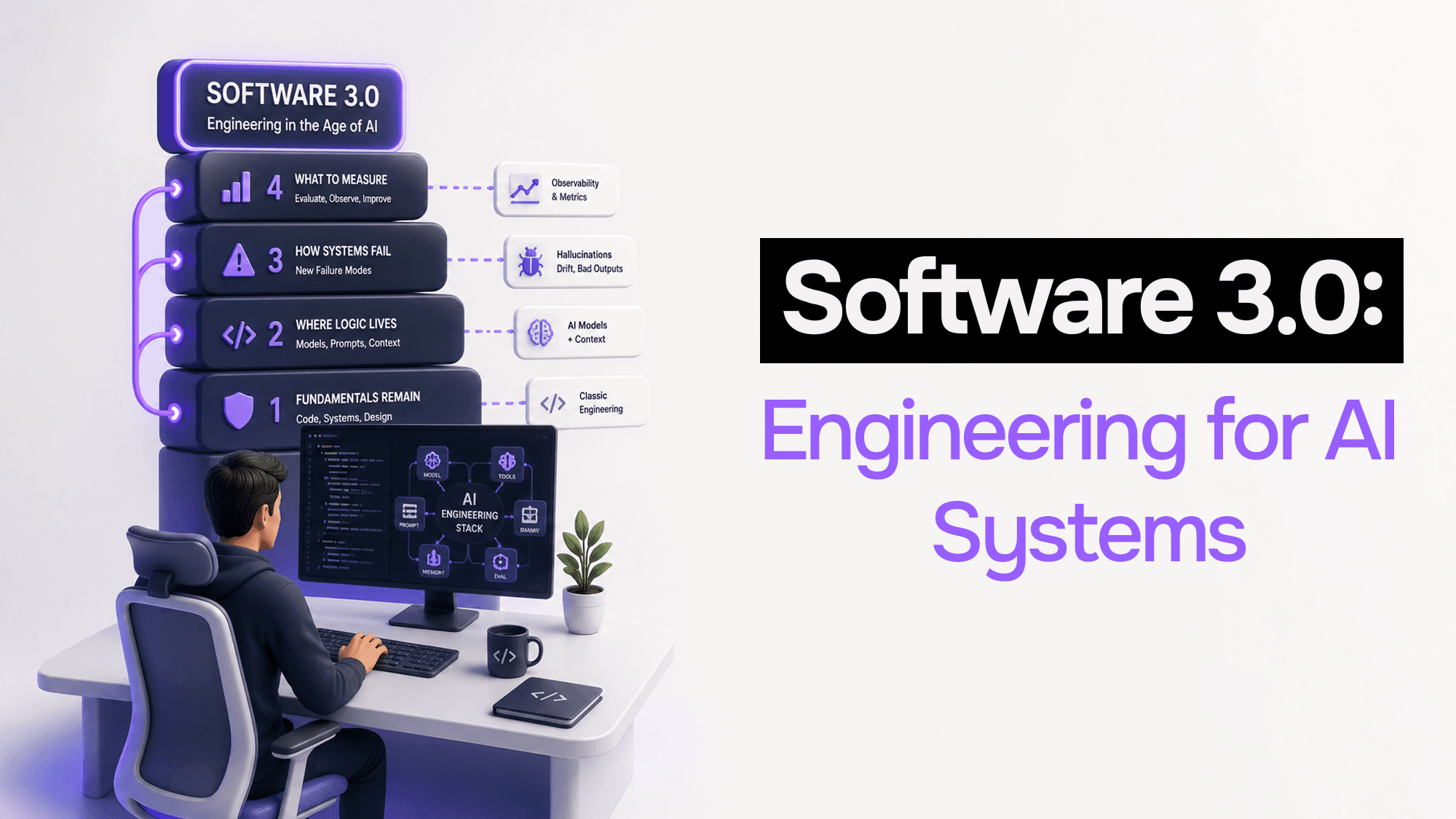
A practical developer-first guide to Software 3.0: LLMs, context windows, retrieval, latency, evals, agent loops, and tool calling.
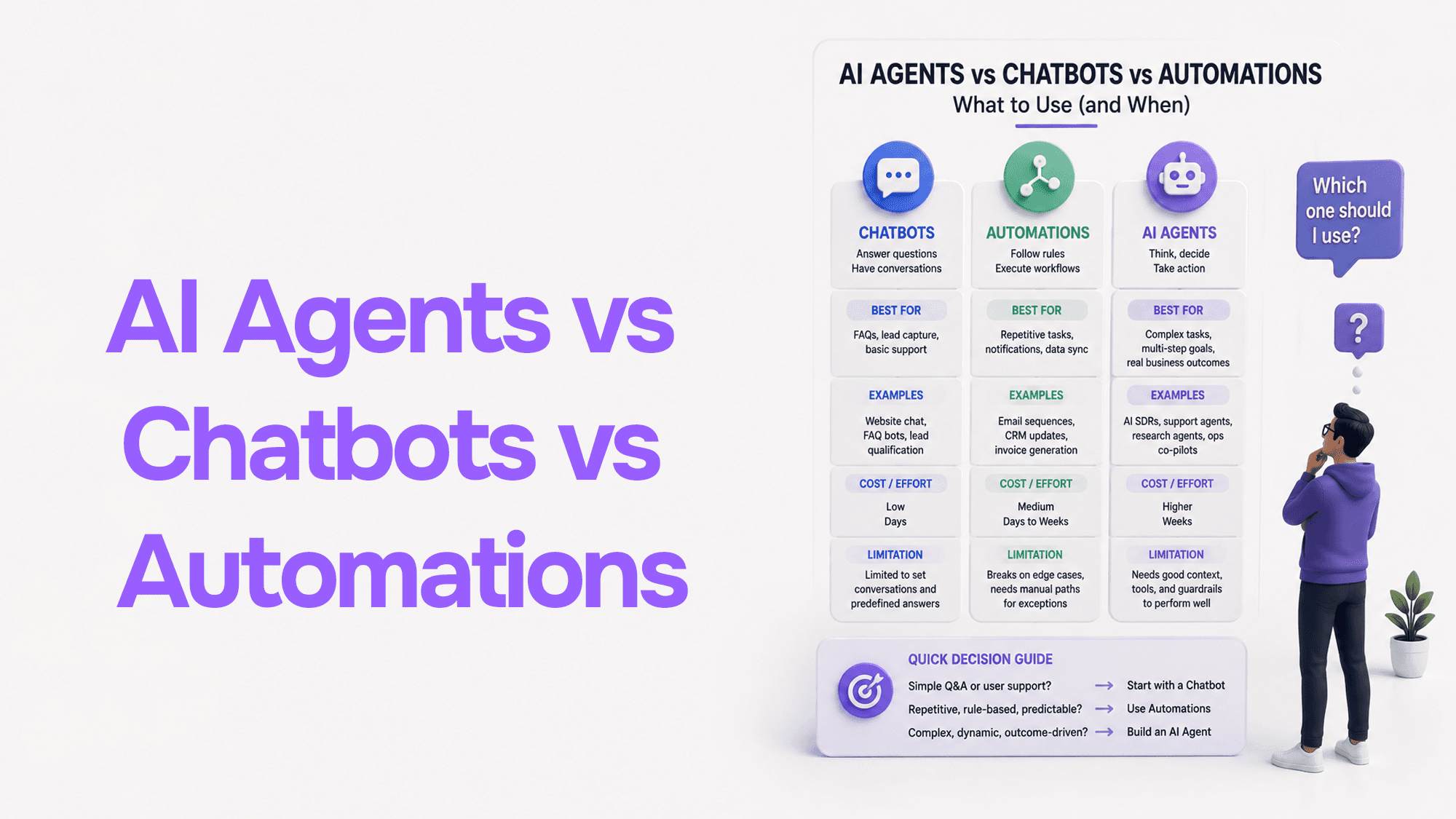
A founder-friendly 2026 guide to picking the right approach—rules-based automation, a chatbot, or a tool-using AI agent—based on risk, ROI, and operational reality.
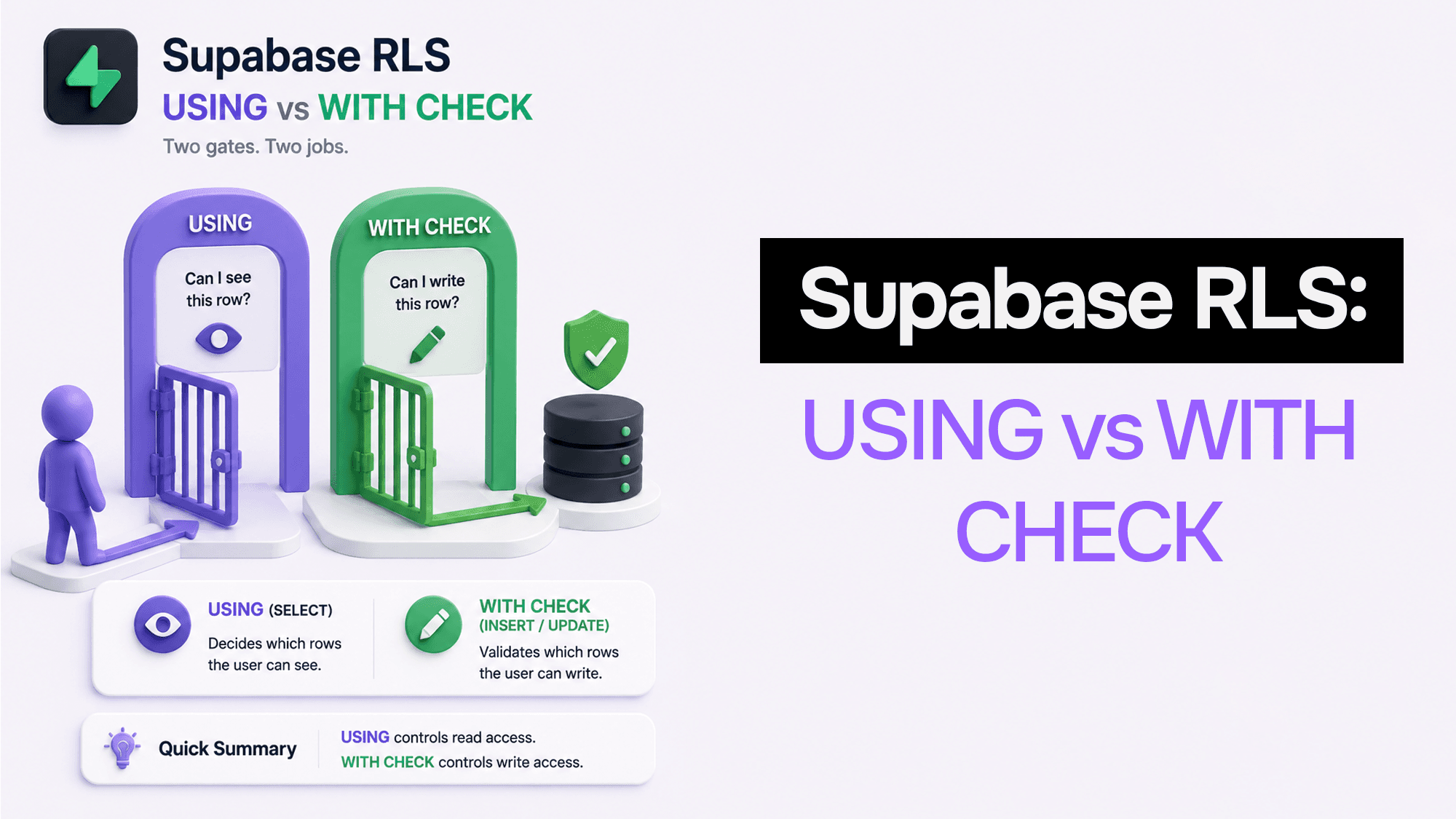
Supabase Row Level Security (RLS) is a Postgres feature that restricts which rows each user can read or write. Policy examples, USING vs WITH CHECK, Storage and Next.js SSR.

AI spend without guardrails turns innovation into margin risk. Learn the architecture shift—filters, state machines, and private models—that restores cost control.
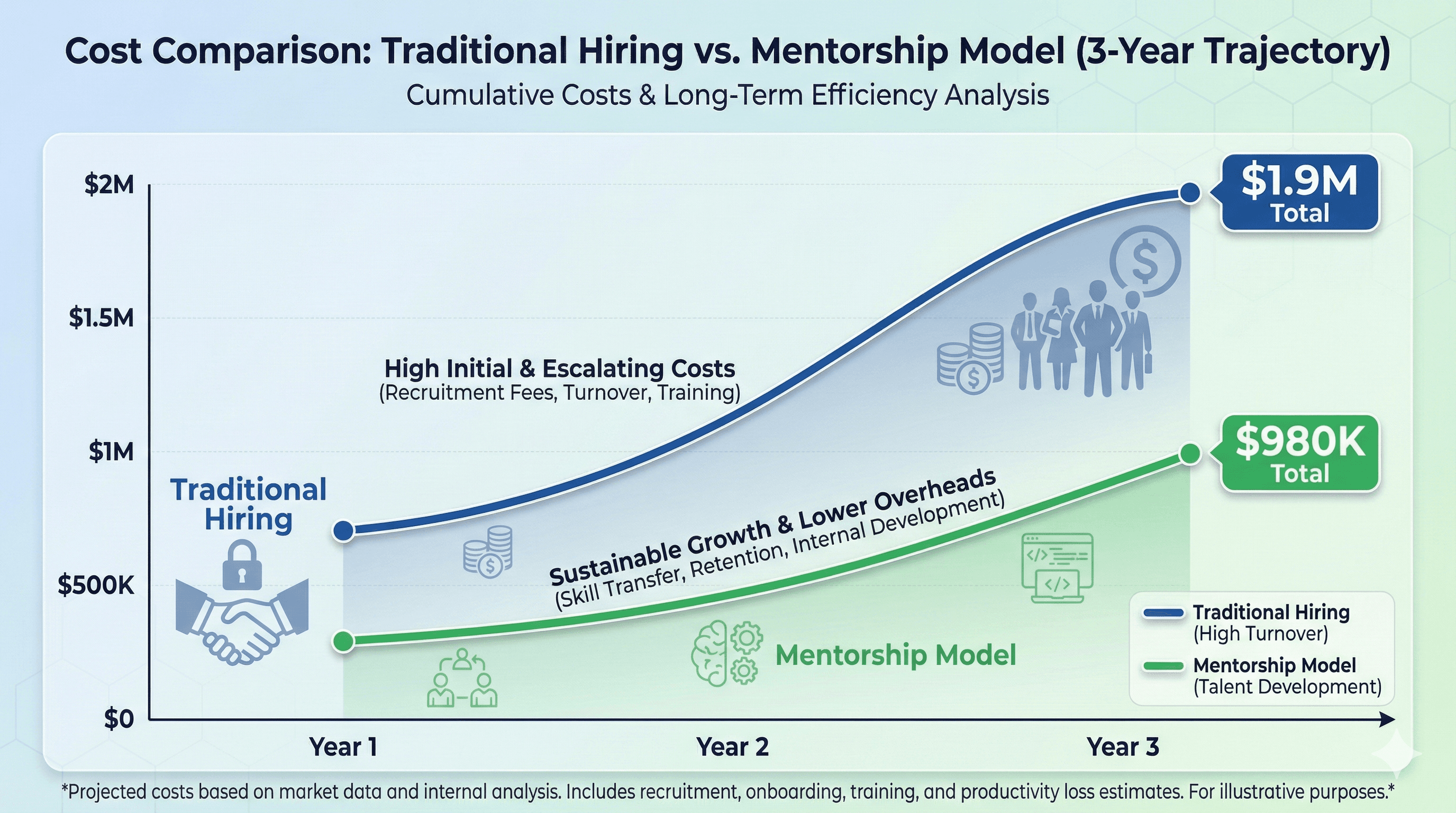
Stop overpaying for senior developers. Discover why building a structured mentorship program yields higher ROI, reduces churn, and scales your engineering team faster than competing for rockstar hires.
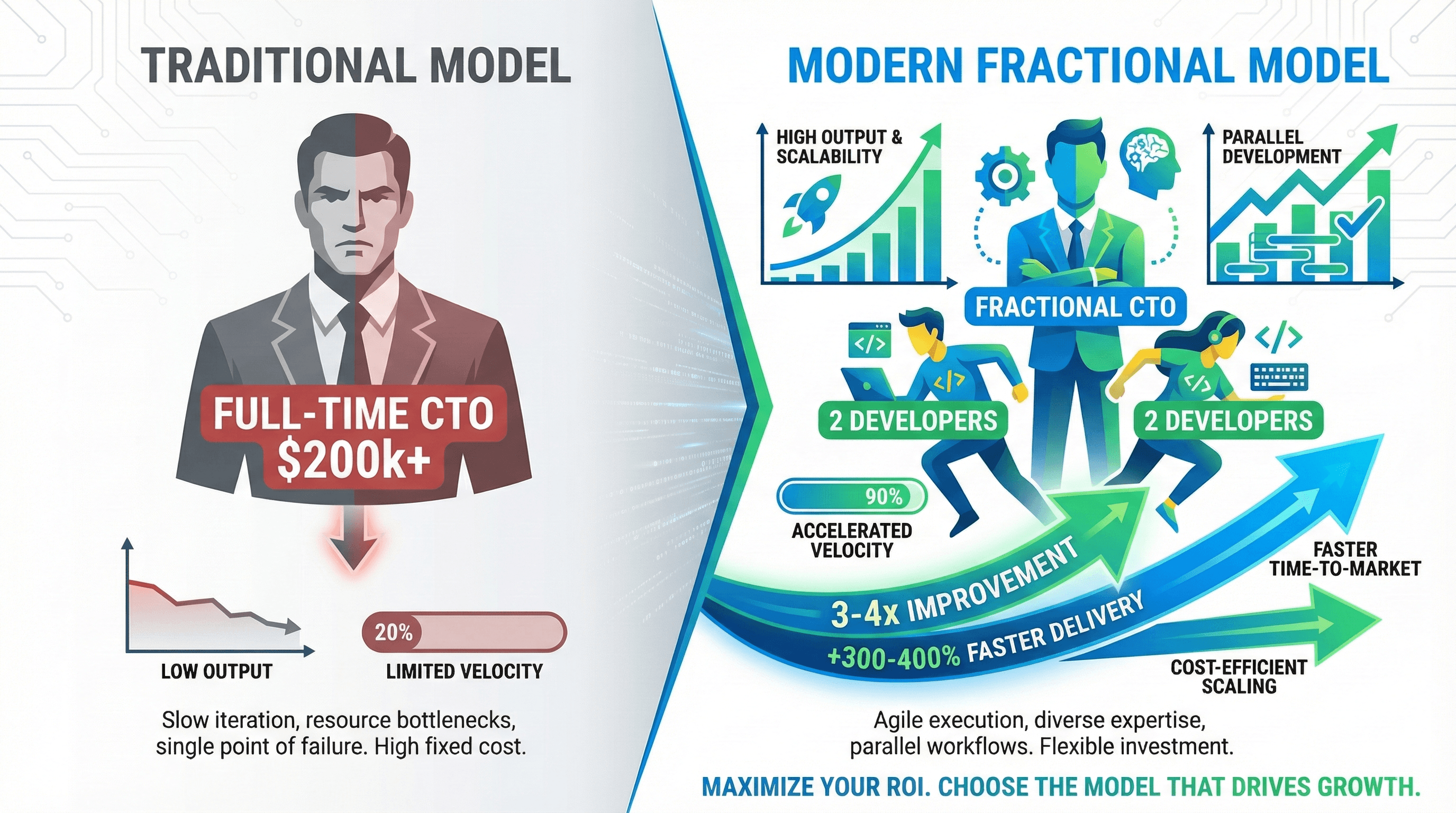
Discover why hiring a full-time CTO before Series A drains startup runway and why the Fractional CTO model is the smarter strategy for Seed-stage growth and velocity.
AI coding tools are changing how developers work. Not by replacing them, but by helping them plan, test, and build software faster. Here’s the simple explanation.

Are you stuck in 'Vibe Coding Hell'? Learn why AI-assisted coding without understanding is dangerous, how it differs from tutorial hell, and discover practical strategies to build real programming skills while using AI tools like ChatGPT, GitHub Copilot, and Claude effectively.
AI can speed up web development, but without structure, it often leads to repetitive designs, broken logic, and poor security. Here's how to use AI tools like ChatGPT, Claude, and Replit responsibly — with real architecture, testing, and best practices.

85% of GenAI launches implode. Deploy bullet-proof JavaScript patterns that end downtimes, kill hidden fees, and save your next release.

Fix Replit errors fast: 'could not find run command', 'your app is not running', agent errors, OOM and login issues, plus when to stop prompting.
Your AI-built website might be invisible to Google. Learn the common SEO pitfalls of AI sites and how to fix them with this friendly, step-by-step guide.
Learn how to debug and fix common issues in Replit AI apps, from database connection errors to security vulnerabilities and deployment challenges.
Unlock the power of tRPC and the T3 Stack for modern web development in 2025. Discover how type safe APIs, modular architecture, and the latest trends like AI integration and Jamstack are transforming how developers build fast, scalable, and maintainable applications.
Discover how AI Code Rescue services can transform buggy AI-generated MVPs into production-ready applications with improved security, performance, and UX.
Learn how to design, implement, and scale GPT-powered automation workflows for business efficiency using LangChain, Zapier, and n8n.

Feeling frustrated by your AI coding assistant? Learn the 'Architect and the Intern' mental model, a powerful workflow to fix AI hallucinations, boost developer productivity, and master tools like GitHub Copilot and ChatGPT. Stop 'vibe coding' and become the architect of your code.
Learn prompt engineering for developers and boost your AI coding results. This hands-on guide shares proven prompt examples, expert tips, and real-world use cases to get better code from ChatGPT, Claude, and other AI tools.
Discover the best AI tools for developers in 2025, including ChatGPT Plus, Cursor.ai, GitHub Copilot, and more. Learn how these tools enhance coding efficiency through real-world insights and performance reviews.
Learn how to use Cursor Rules to make your AI write clean, readable code. This guide includes simple steps, practical examples, and tips to set up rules for your projects.

Learn how to create a spec-compliant MCP server from scratch using TypeScript, Express, and Zod, and use it seamlessly with Cursor.
Explore the key differences between Agent-to-Agent (A2A) communication and Modular Contract Protocols (MCP) — and why you need both to build powerful AI systems.
Learn how I wrapped the Hacker News API into a modular, LLM-ready MCP server with Zod contracts and OpenAPI support using zod-openapi.
Learn how to build Progressive Web Apps (PWAs) with offline capabilities. This step-by-step guide explains service workers, caching, and best practices for creating reliable, offline-ready web experiences.
Understand JavaScript closures with real-life analogies and practical examples. Learn how closures work, their use cases, and why they’re essential for mastering JavaScript.
Learn the differences between localStorage, sessionStorage, and IndexedDB. This guide explains their use cases, provides practical examples, and shows how to integrate Web Storage APIs in your apps.
Discover how lazy loading can revolutionize your JavaScript applications by optimizing performance and enhancing user experience. Learn best practices, implementation techniques, and when to use this powerful tool.
Explore advanced DOM manipulation in vanilla JavaScript, including Shadow DOMs, MutationObserver, IntersectionObserver, custom elements, and computed styles. Learn techniques for efficient, powerful web development.
Learn the essentials of DOM manipulation in vanilla JavaScript. Explore common methods, practical scenarios, and why knowing the fundamentals still matters in a world of frameworks.

Learn the top React performance optimization techniques, including memoization, lazy loading, and using the React Profiler. Discover how to improve load times and reduce unnecessary re-renders.
Discover the key differences between React’s useEffect and useLayoutEffect hooks. Learn when to use each and avoid common pitfalls with this beginner-friendly guide.
Discover how React 18’s automatic batching minimizes re-renders and boosts performance. Learn the basics of batching, when to use flushSync, and how to optimize your React app.
Discover the future of server-side rendering with React Server Components. Learn how this experimental feature can transform your web applications by optimizing performance and simplifying data fetching.
Learn how to unlock the full potential of React 18’s server-side rendering with new features like streaming HTML and selective hydration. Boost performance and create faster, more interactive web applications with these SSR best practices.
Learn the basics of state management in React with this beginner-friendly guide. Understand the difference between app state and component state, and discover best practices to manage state effectively in large applications.
Learn the key differences between debouncing and throttling in JavaScript, how to implement them, and when to use each technique for optimal performance. Discover real-world examples and best practices for handling frequent events in web applications.
Learn when to use useState, useReducer, and useRef for state management in React applications. Discover the best practices and use cases for each React hook to manage state effectively.
Learn how to improve JavaScript error handling by enforcing ESLint rules that enhance code quality and readability. Discover best practices for error handling and how to set up ESLint for enforcing these practices.
Discover 10 powerful HTML tags that enhance functionality, improve accessibility, and boost SEO. Learn how these lesser-known tags can transform your web development projects.
Learn the best practices for naming variables in JavaScript to enhance code readability and maintainability. This comprehensive guide covers the importance of good variable names, practical tips for naming variables, and examples to illustrate the impact of clear and descriptive variable naming. Elevate your JavaScript coding skills by mastering the art of choosing meaningful and consistent variable names.
Seeing 'Cannot access before initialization' in Chrome or 'can't access lexical declaration' in Firefox? What the Temporal Dead Zone is and how to fix it.
This comprehensive guide delves into the advanced usage of JavaScript Promises, specifically focusing on implementing polyfills for Promise.any, Promise.allSettled, and Promise.race. The article breaks down the technical concepts into easily understandable language, complete with well-commented code examples to illustrate how developers can integrate these polyfills into their projects. It explains the significance of each Promise method and provides practical scenarios where these methods can be effectively utilized. The guide also addresses compatibility issues by offering polyfill solutions to ensure that applications run smoothly across different browsers, thereby enhancing the web development process and improving application performance.
Learn how memoization can improve the performance of your JavaScript applications by storing and reusing results of complex functions. Discover the benefits of memoization and how to implement it effectively in your projects.

Discover key strategies to maintain a clean and scalable codebase in frontend development. This guide covers modular design, the DRY principle, descriptive naming, and more to help you enhance project success and manageability.
Learn how to create and use custom hooks in React to streamline your components, reduce excessive useEffect usage, and improve code reusability. This guide offers practical steps to simplify your React applications with custom hooks.
Discover the hidden power of useRef in React. Learn how this essential hook optimizes performance, prevents unnecessary re-renders, and simplifies DOM manipulation for faster, more efficient apps
Learn how to master React re-renders and avoid common performance pitfalls in your applications. This guide dives into React’s re-rendering mechanism and offers practical optimization strategies, best practices, and tips to keep your apps fast and efficient.
Discover how the safe assignment operator (`?=`) simplifies error handling in JavaScript by eliminating the need for verbose `try/catch` blocks, making your code more readable and maintainable.
Learn how ChatGPT can help full-stack developers speed up their work with these 25 essential prompts for Node.js, React, and MongoDB.
Learn dynamic programming in JavaScript with this beginner’s guide. Understand memoization, tabulation, and solve real problems efficiently with code examples.
Explore architecture, performance optimization, and handling large-scale traffic with Node.js and MongoDB. Learn the best practices for building scalable web applications in 2024.
Learn the key differences between SQL and NoSQL databases, when to use each, and best practices for selecting the right database for your application.
Discover the five SOLID principles of software design and how to apply them effectively in full-stack development with practical examples and best practices.
Learn about time complexity in a simple, beginner-friendly way. This post breaks down the concept with easy examples, making it perfect for new coders.
Dockerization means packaging an app and its dependencies into a container. See a working Dockerfile and docker-compose for React, Express and Postgres, and when Kubernetes is worth it.
Learn how to apply Clean Code principles in full-stack development with real-world examples and best practices to improve code quality and maintainability.
Client-side performance is how fast a page loads and responds in the user's browser. Learn what to measure (LCP, INP, CLS), how to measure it in the field, and 13 practical fixes.
Learn the secrets to a perfect Continuous Integration & Continuous Delivery pipeline. This guide covers essential best practices, powerful tools, and practical examples to optimize your workflow.
Discover the key differences between Kafka, RabbitMQ, SQS, and Azure Service Bus in our comprehensive guide to queueing systems. Learn when to choose each one based on your project's specific needs, ensuring you make the best decision for your architecture.
Explore the strengths, weaknesses, and ideal use cases of popular NoSQL databases like Cassandra, ScyllaDB, ElasticSearch, Redis, and DynamoDB to help you make an informed decision for your next project.
Discover strategies and tools for building resilient systems with no single point of failure, ensuring high availability, fault tolerance, and reliability in your applications.
Explore the critical role of physical architecture in scaling systems, with insights into best practices, strategies, and real-world case studies for building resilient, highly available infrastructure.