

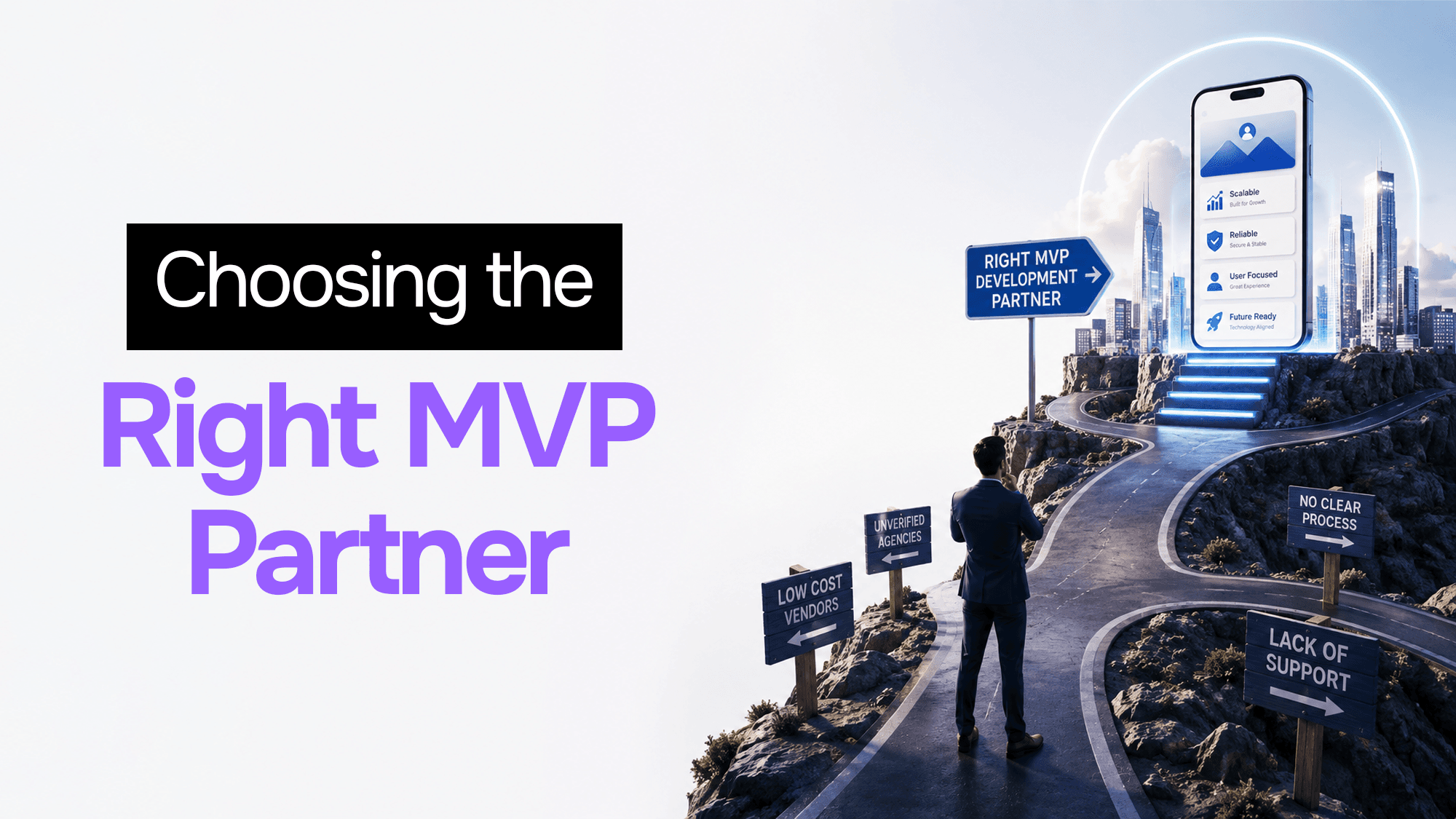
How to Choose the Right MVP App Development Company for Your Business
You have a product idea and you have decided not to build it entirely in-house. Now you face a harder problem: dozens of "MVP app development companies" all promising to turn your idea into an app, and no obvious way to tell the ones who will build something that lasts from the ones who will hand you a fragile demo and an invoice.
Choosing the right MVP app development company is a strategic product decision, not just a decision about who can write the code. The wrong choice does not just cost money, it costs months, and often ends with a rebuild. This guide covers what MVP development companies actually offer, how to assess their capabilities, the mobile vs. web and native vs. cross-platform choices, what a genuine end-to-end partner does, and how to shortlist the right one.
What Does an MVP App Development Company Actually Do?
A real MVP app development company does far more than write code. The good ones take you through the whole journey.
Product discovery to understand the problem, the user, and the single assumption worth testing. MVP strategy to decide what to build and, more importantly, what to leave out. Feature prioritization to keep the first release small and sharp. Technical feasibility to choose an architecture that is fast to build but sound enough to extend. Then design, development, and QA to actually ship it, followed by analytics and feedback collection, post-launch iterations, and scaling the product as it finds traction.
If a company only wants to talk about deliverables and timelines, and never about your users or your assumptions, that is a warning sign. You are hiring a product partner, not a code vending machine.
Why Businesses Choose Custom MVP App Development Services
Off-the-shelf builders are quick to start but limiting to grow with. Custom MVP app development services exist because real products have real constraints.
Validate Product-Market Assumptions
The MVP is your cheapest instrument for testing whether people actually want what you are building, before you commit a full budget.
Reduce Upfront Development Risk
Building only what is needed to test the core idea caps your downside. If the assumption is wrong, you find out after a modest spend, not a catastrophic one.
Get Real User Feedback Earlier
Shipping something small puts real behaviour in front of you months sooner, and behaviour beats opinion every time.
Launch Before Building a Full Product
A focused MVP reaches users in weeks or a few months rather than a year, and that speed is the entire point.
Build Evidence for Investors and Stakeholders
A working MVP with early traction turns "we think users will want this" into "here is what users are already doing," which is far easier to fund.
Make Data-Driven Product Decisions
Once the MVP is live and instrumented, your roadmap comes from real usage rather than guesswork.
What Does MVP App Development for Startups Look Like?
MVP app development for startups looks different at each stage, and a good company adapts to where you are.
Pre-Seed and Idea-Stage Startups
The goal is to validate the core idea as cheaply as possible. Scope should be brutally small, often a single flow that proves the concept.
Seed-Stage Startups
Focus shifts to launching a functional product, acquiring early users, collecting feedback, and preparing for growth.
Funded Startups
Now it is about faster execution, hitting investor milestones, reaching product-market fit, and building a reliable engineering foundation that will not collapse under scale.
Startups Pivoting or Rebuilding an Existing MVP
This is where I spend a lot of my time. Plenty of founders arrive with an MVP that already exists but is holding them back: a failed first build, a poorly built no-code product, deep technical debt, an AI-generated or "vibe-coded" application, or an app with performance and scalability problems. Rebuilding an MVP well is a different skill from starting fresh, because you have to preserve what works while replacing what does not. If your existing MVP is the problem, that is squarely what my AI code rescue and audit work is for.
How Much Does It Cost to Build an MVP App?
There is no single price, because cost is driven by scope. The factors that move it most:
- Number of platforms (web only is cheapest; web plus native mobile costs more).
- Feature complexity and how many edge cases each feature introduces.
- UI/UX requirements, from a standard component library to bespoke design.
- Backend complexity and how much custom logic the product needs.
- Third-party integrations, each of which adds work and a failure mode you do not fully control.
- AI features, which add model, data, and evaluation work.
- Security and compliance requirements, especially in regulated domains.
As rough guidance, a simple MVP often lands in the $15k to $40k range, a standard MVP with integrations and mobile in $40k to $90k, and a complex or compliance-heavy MVP at $90k and up. The right partner helps you spend less by cutting scope, not by cutting quality. For a fuller breakdown, see our guide on the 7 stages of app development.
How to Choose the Best App Development Company to Build MVP
This is the part that actually protects you. When comparing companies, weigh these signals.
Look for Product Thinking, Not Just Coding Skills
The best partners challenge your scope and think about your users. A team that will build literally anything you ask is a liability, not a convenience.
Check Relevant MVP Case Studies
Ask for products like yours that they have actually shipped, and look at real outcomes rather than mockups.
Evaluate Their Technical Expertise
Depth in architecture, security, and scalability is what separates an MVP you can grow from one you will replace.
Understand Their Development Process
A transparent, iterative process with frequent working demos means you can course-correct cheaply instead of waiting for a big, risky reveal.
Ask Who Owns the Code and IP
You should own your code, your data, and your product outright. Confirm this in writing before you start.
Check Post-Launch Support
Launch is the beginning of the product's life. Make sure they will fix bugs, monitor, and iterate afterwards.
Evaluate Communication and Collaboration
Clear updates, honest timelines, and direct access to the people doing the work. Opacity early reliably predicts trouble later.
If you are weighing partners and want a straight, technical assessment of your idea, scope, and the right build approach, book a free strategy call with the team at Eunix. Whether you are starting fresh or rebuilding a struggling MVP, it is far cheaper to get the plan right than to fix it later.
Conclusion
Choosing an MVP development partner is a strategic product decision, not just a decision about who can write the code. The company you pick shapes whether you get a validated product you can scale or a fragile demo you have to throw away.
Judge candidates on product thinking, real technical depth, a transparent process, honest ownership terms, and genuine post-launch support, and weigh them against your actual stage as a startup. The team that respects your users and your budget will out-deliver the one that simply says yes to everything, every time.
Frequently Asked Questions (FAQ)
How much do custom MVP app development services cost?
Custom MVP app development typically ranges from around $15k for a simple single-platform app to $90k or more for a complex, multi-platform product with integrations and compliance needs. The main drivers are the number of platforms, feature complexity, backend and integration work, and any AI or security requirements. Scope discipline matters more than the day rate.
Can an MVP development company build both mobile and web apps?
Yes. A capable MVP development company can deliver web, native mobile (iOS and Android), or cross-platform apps, and will recommend the right approach for your users and budget rather than defaulting to whatever they happen to prefer. For many MVPs, a web app or a cross-platform build is the fastest way to validate demand.
Should startups choose native or cross-platform MVP app development?
For most MVPs, cross-platform (React Native or Flutter) is the pragmatic choice because one codebase covers iOS and Android, which cuts cost and time to launch. Go native when you need heavy device-specific performance, complex animations, or deep platform integrations. The right answer depends on your use case, not on ideology.
Can an MVP app development company scale my product after launch?
A good one builds the MVP so it can scale. That means clean architecture, sensible data models, and a maintainable codebase, so new features and growing traffic don't force a rewrite. Ask specifically how they handle post-launch iterations and scaling, because an MVP built purely for speed often has to be re-architected later.
What should I ask an MVP app development company before hiring them?
Ask to see relevant MVP case studies, how they prioritize features and push back on scope, who owns the code and IP, what their development process and communication cadence look like, and what post-launch support they offer. The answers reveal whether they think about your product or just take orders.
What does an MVP app development company provide?
An MVP app development company provides the full path from idea to launch: product discovery, MVP strategy, feature prioritization, UI/UX design, development, testing, deployment, and post-launch iteration. The best ones combine product thinking with the engineering to build something you can actually scale.
How can native app development companies support quick MVP launches?
They speed up MVP launches by reusing proven architecture and components, choosing the smallest viable scope, and using cross-platform frameworks where native isn't strictly required. Experienced teams move fast because they have shipped similar products before, not because they cut corners on quality.
Stuck on a web app, automation, or AI project?
Fifteen minutes, free. You describe the blocker, I tell you what I would fix first. No deck, no pitch — and if I am not the right fit, I will say so.
Book Your Free 15-Min Strategy CallRelated to: How to Choose the Right MVP App Development Company for Your BusinessIf you found this article helpful, consider buying me a coffee to support more content like this.
Related Articles
MVP software development services explained: the process, cost, timelines, FinTech MVPs, post-launch support, and how to choose the right development partner.
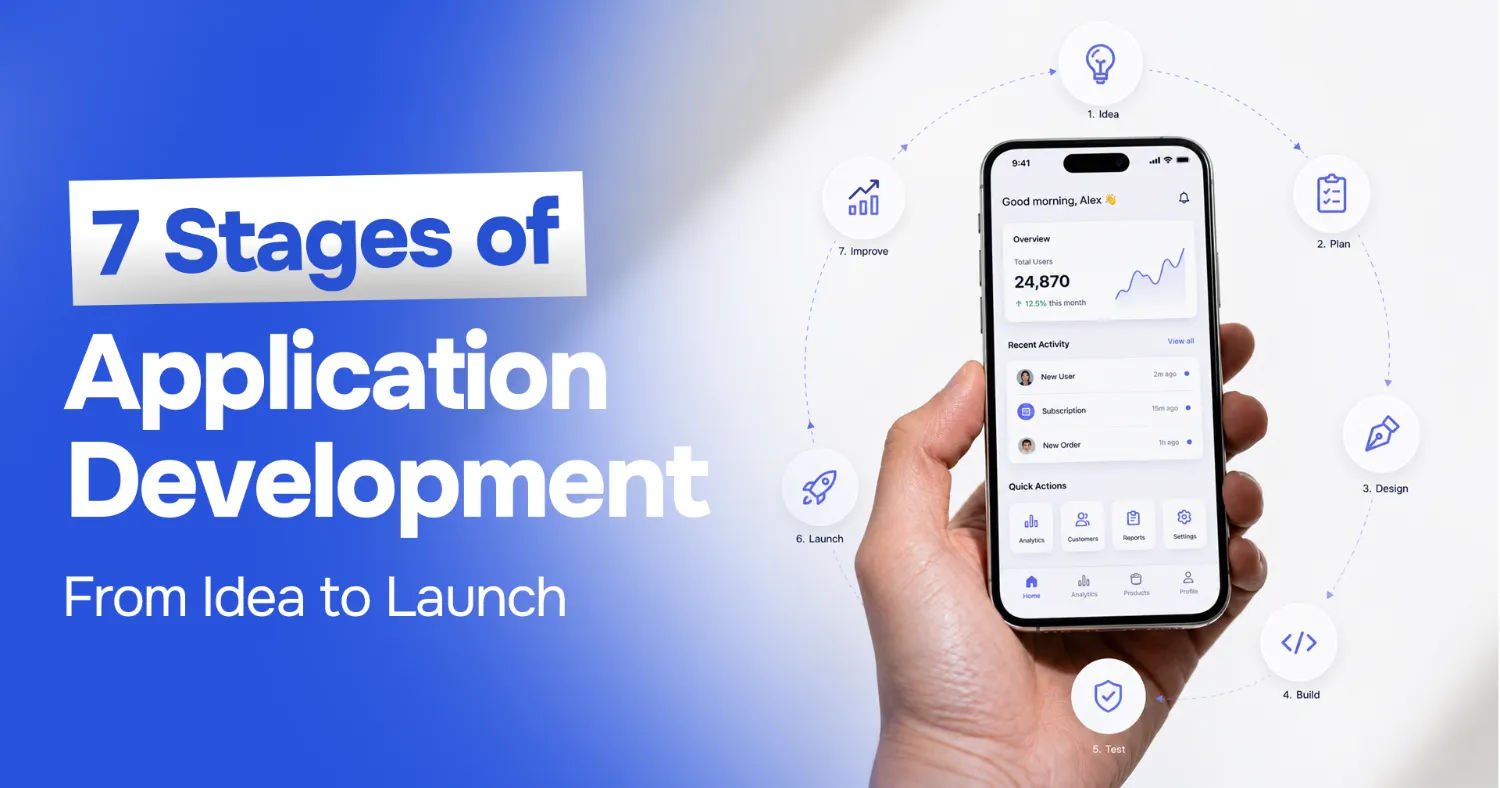
Learn what the 7 stages of app development are, the complete app development process, timelines, lifecycle, and how AI tools like Copilot improve development.
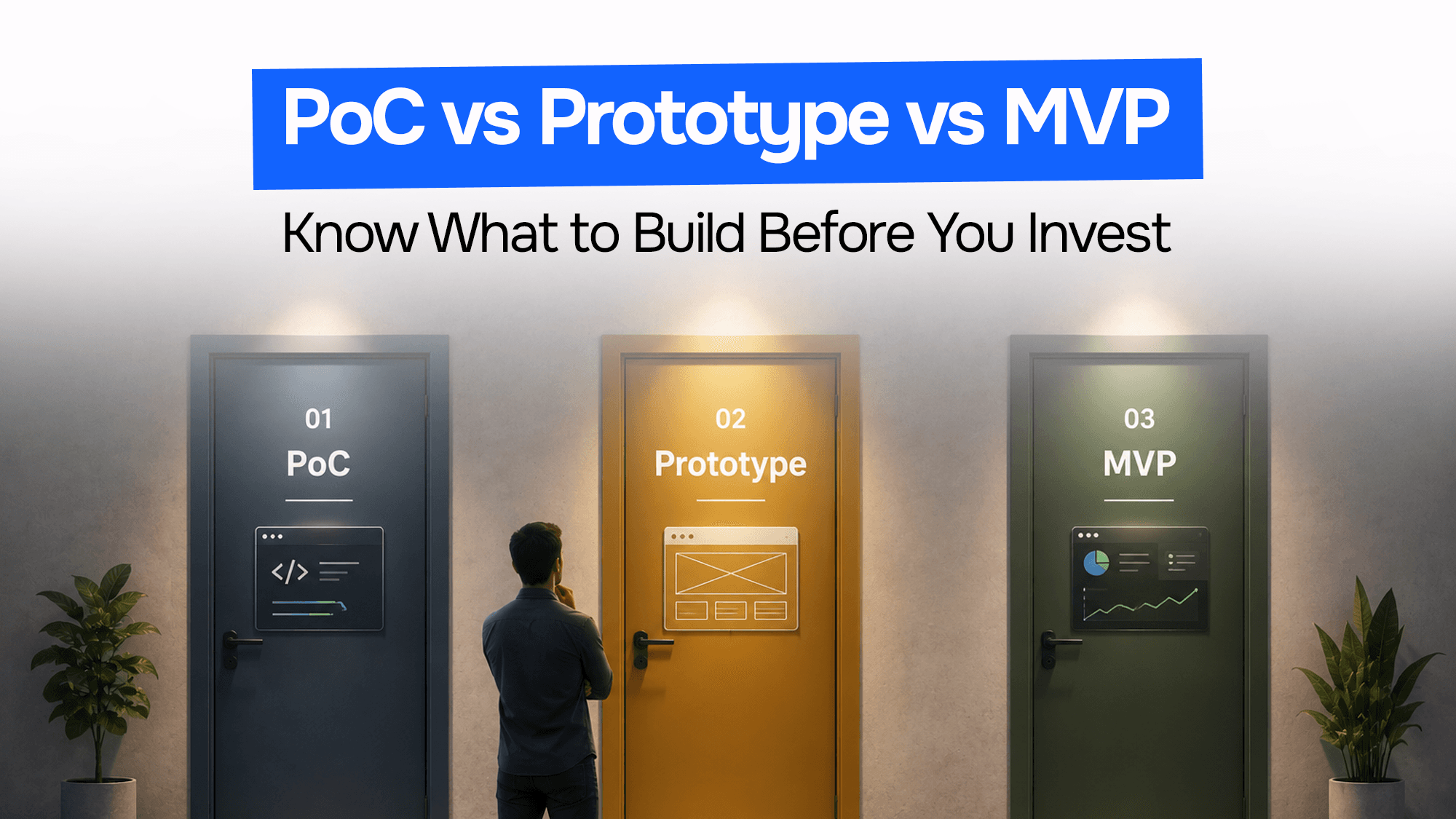
Confused about PoC vs prototype vs MVP? Learn the key differences, costs, timelines, use cases, and when to build each for your startup or software product.
Stuck on a web app, automation, or AI project?
Fifteen minutes, free. You describe the blocker, I tell you what I would fix first. No deck, no pitch — and if I am not the right fit, I will say so.
Book Your Free 15-Min Strategy CallRelated to: How to Choose the Right MVP App Development Company for Your Business