

MVP Software Development Services: What to Expect from Discovery to Deployment
Most founders do not need a finished product to start. They need proof that the product is worth finishing. That is exactly what MVP software development services provide: a structured way to turn an idea into a real, working minimum viable product, put it in front of real users, and learn whether the market wants it before you spend a full budget building it.
The problem is that "MVP" has become a word people use loosely. Some treat it as a cheap, half-broken version of the real thing. Others treat it as a prototype that never has to work. Done properly, an MVP is neither. It is the smallest slice of real, production-quality software that tests your riskiest assumption. This guide walks through everything you should expect from MVP software development services, from discovery to deployment: the process, the timeline, the cost, what a FinTech MVP requires, how to choose a partner, and the mistakes that sink otherwise good ideas.
What Are MVP Software Development Services?
MVP software development services are the complete set of activities a team performs to take a product concept and turn it into a launched minimum viable product. That spans discovery and validation, UX and UI design, engineering, testing, deployment, and the early maintenance that keeps the product alive after launch. MVPs are used across nearly every industry, from FinTech and health to logistics, SaaS, and marketplaces, because the underlying question is universal: will people use this?
What is a Minimum Viable Product?
A minimum viable product is the version of your product with just enough functionality to deliver real value to early users and generate learning. It is not feature-complete by design. Every feature it contains earns its place by supporting the single core promise you are testing. Everything else waits.
Why MVPs Matter
An MVP matters because it converts opinion into evidence. Instead of debating whether users want something, you ship a small version and watch what they actually do. That evidence is what lets you invest confidently, or pivot cheaply, long before a full build would have told you the same thing at ten times the cost.
Who Should Build an MVP?
Anyone launching something genuinely new should build an MVP: early-stage founders testing a first idea, established companies entering a new market, and enterprises validating an internal tool before rolling it out widely. If you are certain of demand and only executing a known, proven pattern, you may skip straight to a full build. Most of the time, you are less certain than you feel, and an MVP is the safer bet.
Why Businesses Choose MVP Software Development Services
Validate Product-Market Fit
The MVP is the cheapest instrument you have for testing whether your product solves a problem people care about. Real usage, retention, and willingness to pay are far more honest signals than survey answers or enthusiasm in a pitch meeting.
Reduce Development Costs
Building only what is needed to test the core idea cuts the upfront spend dramatically. You avoid pouring money into features that, it turns out, nobody uses, which is where most wasted software budget goes.
Launch Faster
A focused MVP reaches users in months rather than a year. Speed matters because the sooner real people touch the product, the sooner you learn, and learning is the entire point.
Reduce Risk
By committing a small amount before you know the outcome, you cap your downside. If the assumption is wrong, you find out after a modest investment instead of a catastrophic one.
Secure Investor Funding
A working MVP with early traction is one of the strongest things you can put in front of investors. It turns "we think users will want this" into "here is what users are already doing," which is a materially easier story to fund.
Collect Real Customer Feedback
Once real users are in the product, you get a steady stream of feedback grounded in behaviour rather than speculation. That feedback becomes the roadmap for what to build next.
Top MVP Software Development Companies to Consider in 2026
There is no single best provider, only the best fit for your stage, budget, and risk tolerance. Rather than rank named vendors whose quality varies engagement to engagement, it is more useful to compare the types of provider and what each is genuinely best for. Use the criteria in the "how to choose" section below to evaluate any specific company against these categories.
| Provider Type | Best For | Key Strengths and Trade-offs |
|---|---|---|
| In-house team | A long-term core product you will own for years | Full control and context; slow and expensive to hire, and hard to justify before validation |
| Individual freelancers | Very small, well-defined scope | Low cost and flexibility; continuity and coordination risk, limited breadth |
| Offshore dev shop | Cost-sensitive builds with tight specifications | Low day rates; needs very clear requirements, quality and communication vary |
| Boutique product studio (such as Eunix) | Founders who need senior, production-grade MVPs with product guidance | Senior engineers, product thinking, and accountability; higher rate than a freelancer, smaller scale than a large agency |
| Large agency | Enterprise programs with big budgets | Scale, process, and breadth; expensive, slower, and often less direct access to senior people |
End-to-End MVP Development Process (Ideation to Deployment)
A credible MVP development services end-to-end process, from ideation to deployment, moves through the same stages regardless of who runs it. Here is what each stage delivers.
Discovery Workshop
A structured session to align on the problem, the target user, the core assumption to test, and what success looks like. This is where scope is set and, more importantly, where scope is cut.
Market Research and Competitor Analysis
Understanding what already exists, where the gap is, and how users solve the problem today. The honest competitor is usually a spreadsheet or a manual workaround, not another app.
Feature Prioritization
Ruthlessly separating the few features that test the core idea from the many that can wait. A well-prioritized MVP is defined as much by what it leaves out as by what it includes.
UI/UX Design
Turning the prioritized scope into user flows, wireframes, and a clickable prototype so the experience is worked out before it becomes expensive to change in code.
Technical Architecture
Choosing an architecture, stack, and data model that is simple enough to build fast but sound enough to extend if the MVP succeeds. This decision is where future scalability is won or lost.
Agile Development
Building the product in short sprints with working software at the end of each, so progress is visible, feedback is continuous, and course correction stays cheap.
Quality Assurance
Testing functionality, integrations, performance, and security alongside development rather than at the end, so defects are caught while they are still small.
Deployment
Getting the verified build safely into production, with monitoring and error tracking in place before launch and a rollback plan ready.
Analytics & Feedback
Instrumenting the product so that once it is live, you can read real behaviour and turn it into the next set of priorities.
What Is Included in Custom MVP Software Development Services?
Custom MVP software development services build for your specific problem rather than forcing it into a template. A complete engagement typically covers:
Product Discovery
Defining the problem, users, and the single assumption the MVP exists to test.
UX Research and UI Design
Designing flows and interfaces around how your users actually work, not a generic pattern.
Web Development
Building responsive web applications, commonly on React or Next.js with a modern backend.
Mobile Development
Delivering iOS and Android, often via React Native or Flutter so one codebase serves both platforms.
Backend APIs
Designing the services and APIs that power the product and any integrations it depends on.
Cloud Infrastructure
Setting up hosting, databases, and storage on a cloud platform that can grow with the product.
Security
Building in authentication, authorization, and data protection from the start rather than bolting them on later.
DevOps
Establishing CI/CD, environments, and deployment automation so shipping is safe and repeatable.
QA
Verifying the product works correctly across the paths and devices your users will actually use.
Deployment
Launching to production and handing over a documented, maintainable system.
MVP Development Services for FinTech Companies
MVP development services for FinTech companies carry an extra weight that consumer apps do not: money and regulation. You cannot ship a financial MVP that treats security and compliance as later problems. A serious FinTech MVP accounts for:
PCI DSS
Meeting the payment card security standard wherever card data is handled.
KYC
Building know-your-customer identity verification into onboarding.
AML
Supporting anti-money-laundering checks and reporting where required.
Fraud Detection
Designing for suspicious-activity detection early, because financial products attract abuse fast.
Payment APIs
Integrating processors such as Stripe or Adyen correctly and securely.
Banking APIs
Connecting to banking and open-banking providers where the product depends on account data.
Security
Applying encryption, strict access control, and audit logging as non-negotiable defaults.
Compliance
Structuring the product to satisfy the regulations of every jurisdiction you operate in.
Scalability
Architecting so that transaction volume can grow without re-platforming under load.
This is an area where cutting corners is genuinely dangerous, and where the engineering discipline behind the MVP matters more than the speed of the demo. It is also the kind of build I have repaired more than once when a fast-first prototype hit production and its security and reliability gaps surfaced.
How Long Does MVP Development Take?
A typical MVP takes roughly 3 to 5 months from discovery to launch. The exact mobile application development timeline depends on scope, but the stage-by-stage shape is fairly consistent.
| Stage | Typical Duration |
|---|---|
| Discovery | 1 to 2 weeks |
| Design | 2 to 4 weeks |
| Development | 6 to 12 weeks |
| Testing | Runs alongside build, plus 1 to 2 weeks hardening |
| Deployment | A few days to 1 week |
Discovery sets scope and kills bad assumptions early. Design turns that scope into something buildable. Development is the longest stage and scales with feature count. Testing runs throughout rather than as a final phase. Deployment is short when monitoring and infrastructure were prepared in advance. A simple MVP can compress this; a compliance-heavy FinTech MVP will extend it. For a deeper look at the full lifecycle, see our guide to the 7 stages of app development.
How Much Do MVP Software Development Services Cost?
MVP cost varies too much by scope and region to quote a single number, so it is more honest to talk in ranges and in the factors that move you within them.
Complexity
More screens, more logic, and more edge cases raise cost non-linearly.
Features
Every feature adds build, test, and maintenance time. Fewer, sharper features are cheaper and usually better.
Team Size
Larger teams cost more per week and add coordination overhead; a small senior team is often the better value.
Technology
Unusual or specialized stacks command higher rates than mainstream ones.
Platform
Web only is cheapest. Web plus mobile, or native iOS and Android, increases effort.
Integrations
Each third-party system adds work and a failure mode you do not fully control.
Compliance
Regulated domains such as FinTech and health add design, documentation, and audit cost.
AI Features
Genuine AI functionality adds model, data, and evaluation work beyond standard application development.
| MVP Type | Typical Range | What It Buys |
|---|---|---|
| Simple MVP | $15k to $40k | A focused web app, standard auth, few integrations |
| Standard MVP | $40k to $90k | Custom backend, payments, several integrations, web plus mobile |
| Complex / FinTech MVP | $90k to $200k+ | Multiple roles, compliance, high scale, custom infrastructure |
These ranges are illustrative. The same MVP can cost very differently depending on region, seniority, and how much scope discipline is applied.
How to Choose the Right MVP Software Development Agency
Choosing an MVP software development agency is mostly about verifying substance behind the sales pitch. The signals that matter:
Portfolio
Have they actually shipped products like yours, and can they show you working results rather than mockups?
Industry Experience
Relevant domain experience, especially in regulated areas, saves you from paying for their learning curve.
Product Strategy
Do they push back on scope and think about the user, or do they simply build whatever you ask? You want the former.
Agile Process
A transparent process with frequent working demos means you can course-correct cheaply instead of waiting for a big reveal.
Technical Expertise
Depth in architecture, security, and scalability, not just the ability to produce screens that look right.
Transparent Communication
Clear updates, honest timelines, and direct access to the people doing the work. Opacity early is a reliable predictor of trouble later.
Taken together, these amount to MVP development services strategy and technical expertise: the judgment to decide what to build, paired with the engineering to build it properly.
MVP Development Services Post-Launch Maintenance and Support
Launch is the beginning of the product's life, not the end. MVP development services post-launch maintenance and support keep the product healthy and improving. It covers:
Bug Fixes
Resolving the issues that only real-world usage reveals.
Monitoring
Watching uptime, errors, and performance so problems are caught before users report them.
Security Updates
Patching dependencies and vulnerabilities as they are disclosed.
Analytics
Reading real behaviour to guide what to build next.
Feature Releases
Shipping improvements in a steady cadence rather than large risky drops.
Infrastructure Scaling
Growing capacity as usage grows, without downtime.
Performance Optimization
Keeping the product fast as data and traffic increase.
Customer Feedback Implementation
Turning what users tell you into concrete product changes.
Budgeting nothing for this stage is a decision to let a working product quietly decay. A common guideline is to reserve 15 to 20 percent of the build cost per year for maintenance.
Common Mistakes Founders Make When Building an MVP
Building too many features
The most common failure. An MVP with everything in it is not an MVP; it is a slow, expensive full build wearing the wrong label.
Skipping user interviews
Building on assumptions instead of evidence. Talk to users before, during, and after.
Ignoring analytics
Shipping without instrumentation means launching blind and guessing at what to do next.
Choosing the wrong tech stack
Picking technology for hype rather than fit, and paying for it in hiring and maintenance later.
No product roadmap
Treating the MVP as the destination rather than the first step of a plan.
Poor UX
Shipping something powerful that users cannot figure out. They will not complain; they will just leave.
Hiring based on price alone
The cheapest quote is frequently the most expensive outcome once rework is counted.
No scalability planning
Building something that cannot survive the very success you are hoping for.
Why Choose Eunix for MVP Software Development?
Eunix Tech is a software consultancy that builds MVPs the way they should be built: fast, but production-grade from the first commit. It is founded and led by a senior engineer with over a decade of experience, two published books on shipping software well, and a track record that includes integration infrastructure trusted by companies like Amazon and Best Buy.
The difference shows up in three places. First, senior engineers do the work, not juniors learning on your budget, which is why the MVPs hold up when real users arrive. Second, the same team that has rescued failed and vibe-coded builds knows exactly which shortcuts cause the expensive problems, so they are avoided the first time. Third, FinTech and compliance experience means a financial MVP is built with security and regulation designed in, not bolted on. You get a working, validated product, an honest partner who will tell you what to cut, and a codebase you can actually scale if the MVP succeeds.
Conclusion
An MVP is the most reliable way to turn a product idea into evidence. Done well, MVP software development services reduce risk, validate your idea faster, save time and budget, accelerate your go-to-market, and leave you with a foundation you can scale rather than a prototype you have to throw away.
The teams that win are not the ones that build the most. They are the ones that build the right smallest thing, learn from it, and expand deliberately. Whether you are a first-time founder or an established company entering a new market, the process, the timeline, and the partner you choose will shape the outcome more than the idea itself.
If you have a product idea and want to pressure-test the scope, cost, and timeline before committing, book a free strategy call and talk it through with the team at Eunix. It is far cheaper to get the plan right than to fix it later.
Frequently Asked Questions (FAQ)
What are MVP software development services?
MVP software development services are the end-to-end work of turning a product idea into a minimum viable product: discovery and validation, UX/UI design, building the smallest release that tests your core assumption, testing, deployment, and post-launch support. The goal is to learn whether real users want the product before you invest in a full build.
What are custom MVP development solutions?
Custom MVP development solutions are MVPs built specifically for your problem rather than assembled from a rigid template. They cover product discovery, custom UX and UI, web and mobile development, backend APIs, cloud infrastructure, security, and DevOps, so the MVP fits your real workflow and can scale if it succeeds.
Who provides the best custom MVP development solutions?
The best fit depends on your stage. Founders who need senior, production-grade engineering and honest product advice are usually best served by a small product studio rather than a large agency or a pool of freelancers. Judge providers on portfolio, relevant industry experience, product thinking, a clear Agile process, and whether they offer post-launch support.
What is the difference between an MVP and a prototype?
A prototype is a throwaway model used to demonstrate an idea or test a design; it is not built to run in production. An MVP is real, working software released to real users to validate demand. A prototype answers "does this look right?" An MVP answers "will people actually use and pay for this?"
Can an MVP be scaled into a full product?
Yes, if it was built with that in mind. A well-engineered MVP uses clean architecture, sensible data models, and a maintainable codebase so new features can be added without a rewrite. A rushed MVP built purely for speed often has to be re-architected, which is why the engineering quality of the build stage matters even at MVP scale.
How long does MVP development take?
A typical MVP takes about 3 to 5 months from discovery to launch. Discovery is usually 1 to 2 weeks, design 2 to 4 weeks, development 6 to 12 weeks, and testing and deployment a few weeks on top. Simple MVPs can ship faster; MVPs with heavy compliance or complex integrations take longer.
What technologies are commonly used for MVP development?
Common MVP stacks include React or Next.js on the frontend, Node.js or Python on the backend, PostgreSQL or a managed database, and cloud infrastructure on AWS, Google Cloud, or a platform like Vercel or Supabase. For mobile, React Native and Flutter are popular because one codebase covers both iOS and Android.
Do MVP development services include post-launch support?
Good ones do. Post-launch support covers bug fixes, monitoring, security updates, analytics, performance optimization, infrastructure scaling, and shipping improvements based on real user feedback. Launch is the start of the product's life, not the end, so ongoing maintenance should be part of the plan from day one.
How do I choose the best MVP software development company?
Look at their portfolio and relevant industry experience, ask whether they think about product and not just code, confirm they use a transparent Agile process with frequent working demos, check their technical depth, and make sure they offer post-launch support. Avoid choosing on price alone, which is the most common and expensive mistake.
What does MVP development services strategy and technical expertise include?
It includes the product strategy to decide what to build and what to leave out, and the technical expertise to build it well: architecture, security, scalable data models, testing, and DevOps. Strategy without engineering produces plans that cannot ship; engineering without strategy produces software nobody needs. You want both.
Stuck on a web app, automation, or AI project?
Fifteen minutes, free. You describe the blocker, I tell you what I would fix first. No deck, no pitch — and if I am not the right fit, I will say so.
Book Your Free 15-Min Strategy CallRelated to: MVP Software Development Services: What to Expect from Discovery to DeploymentIf you found this article helpful, consider buying me a coffee to support more content like this.
Related Articles
Looking for an MVP app development company? Learn how to evaluate services, technical expertise, cost, timelines, and startup fit before choosing a partner.
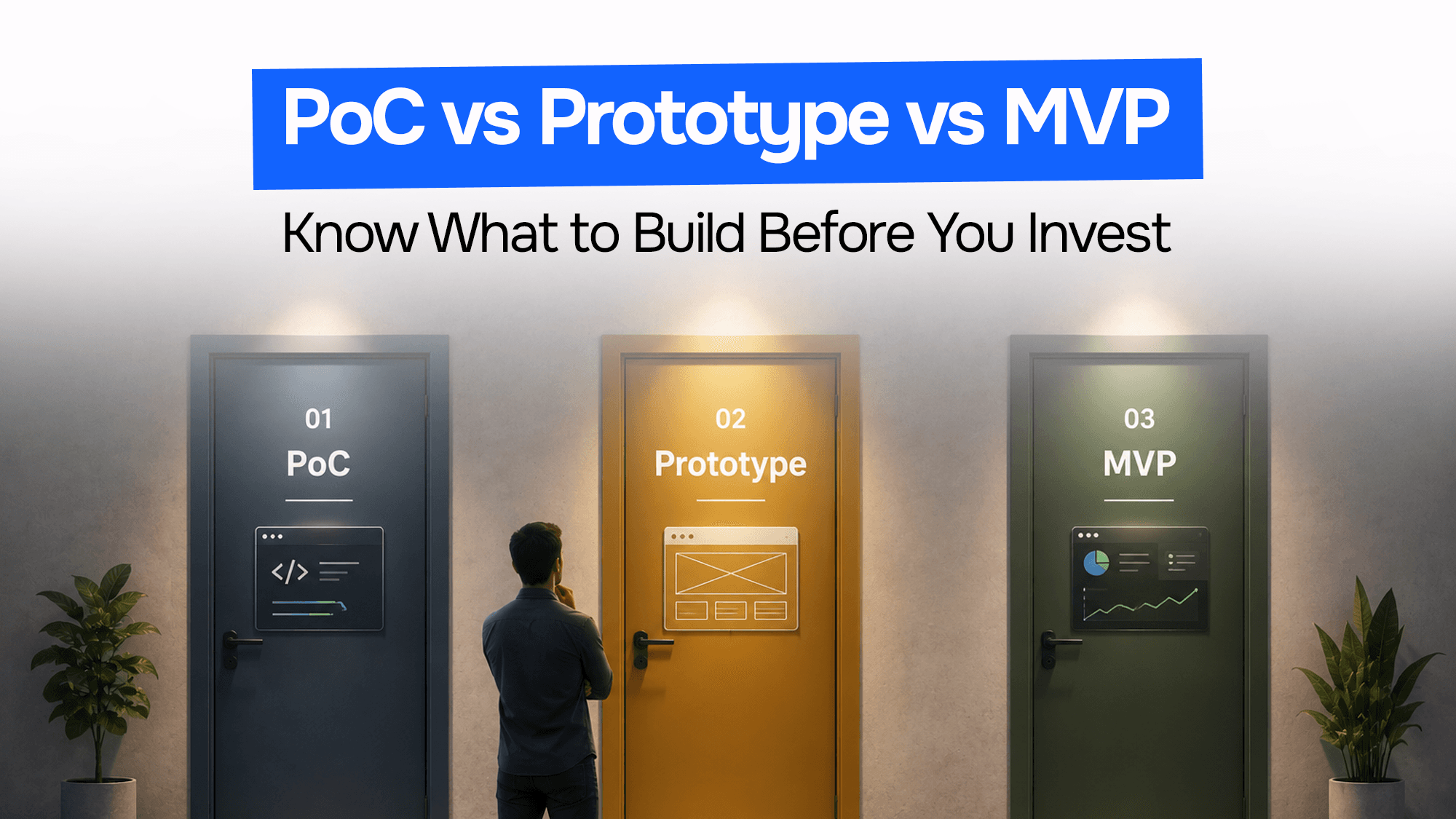
Confused about PoC vs prototype vs MVP? Learn the key differences, costs, timelines, use cases, and when to build each for your startup or software product.
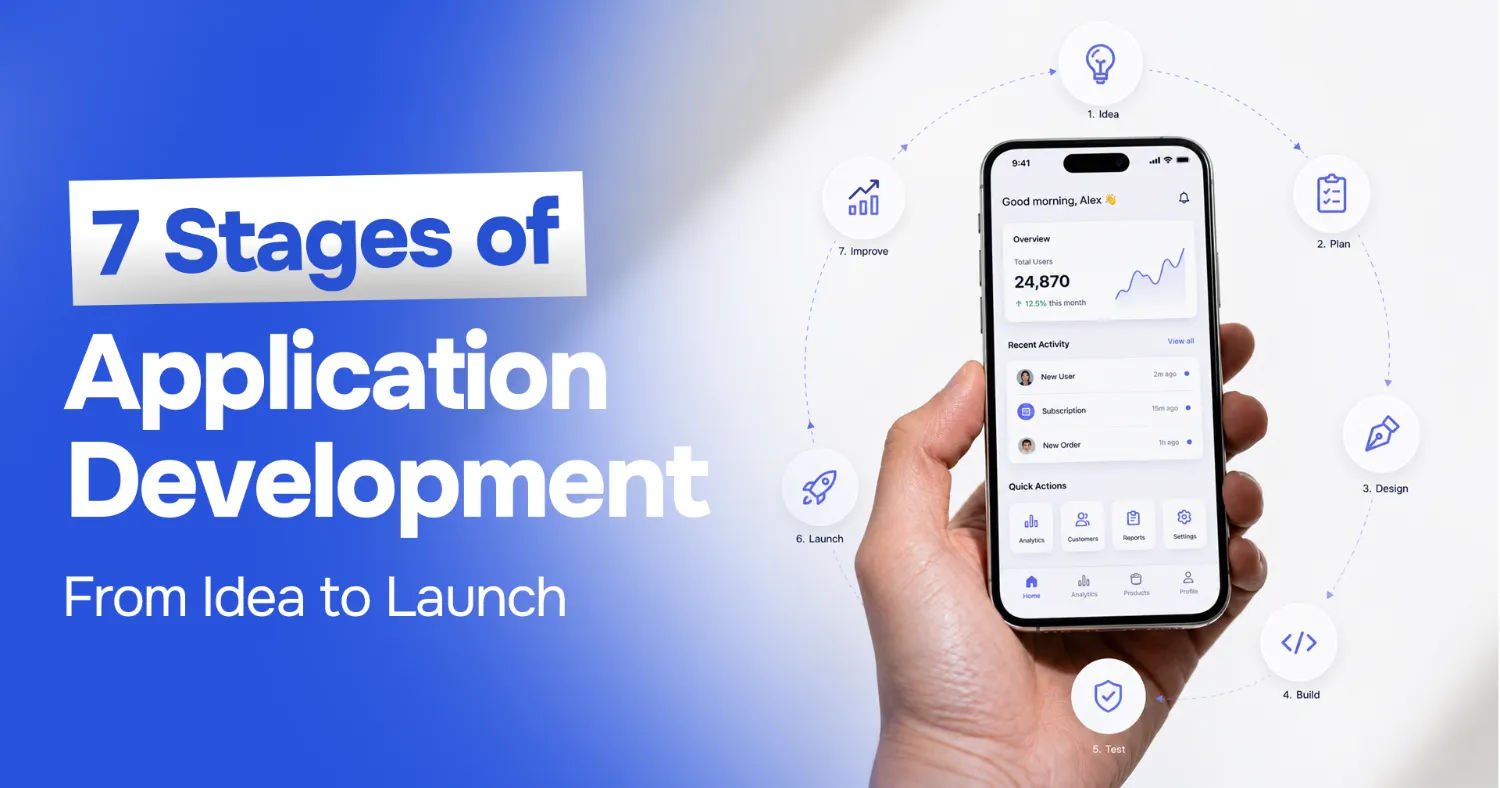
Learn what the 7 stages of app development are, the complete app development process, timelines, lifecycle, and how AI tools like Copilot improve development.
Stuck on a web app, automation, or AI project?
Fifteen minutes, free. You describe the blocker, I tell you what I would fix first. No deck, no pitch — and if I am not the right fit, I will say so.
Book Your Free 15-Min Strategy CallRelated to: MVP Software Development Services: What to Expect from Discovery to Deployment