

PoC vs Prototype vs MVP: What's the Difference and What Should You Build?
You have an idea for a product, and someone has told you to "build an MVP." Someone else says you need a "proof of concept" first. A third person mentions a "prototype." They sound like the same thing, so you are about to spend money without being sure what you are actually buying. That confusion is expensive, because choosing the wrong validation approach wastes development time and budget on answering a question you did not need to ask.
Here is the thing to understand about PoC vs prototype vs MVP: they are not three names for the same thing. They answer three completely different questions. A proof of concept (PoC) answers "can we technically build this?" A prototype answers "does this product experience make sense?" An MVP answers "will real users actually use or pay for this?" Pick the one that matches the risk you actually have.
PoC vs Prototype vs MVP: The Quick Answer
Before the detail, here is the whole thing in one table.
| PoC | Prototype | MVP | |
|---|---|---|---|
| Question it answers | Can we build it? | Does the experience make sense? | Will people use or pay for it? |
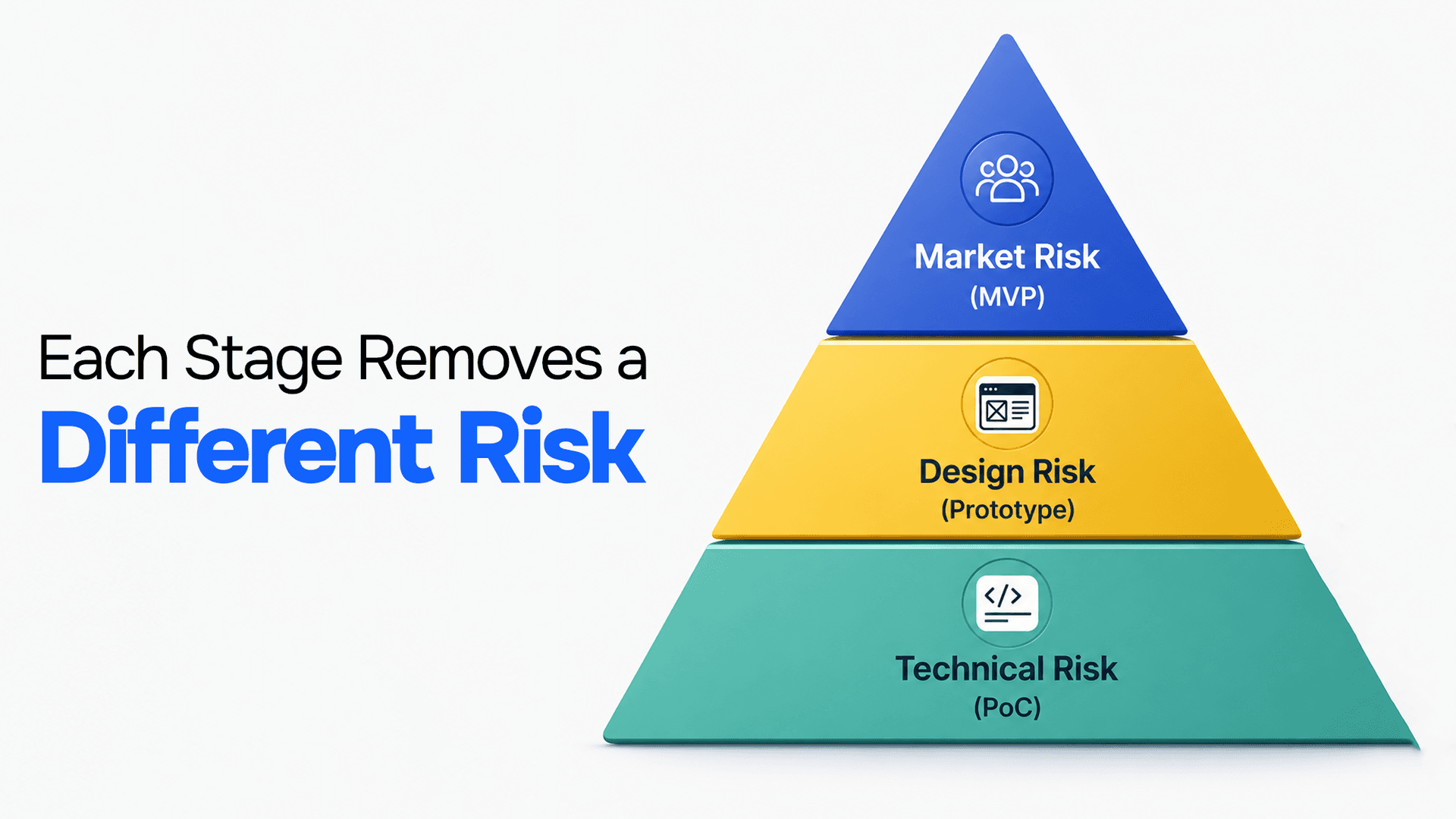
| Risk it reduces | Technical | Design / UX | Market |
| Is it functional? | Partly (proves one thing) | No (mockup) | Yes (real product) |
| Real users? | No | Sometimes, in testing | Yes |
| Typical cost | Low | Low to medium | Medium to high |
| Usually thrown away? | Yes | Yes | No, it is your product |
What Is a Proof of Concept (PoC)?
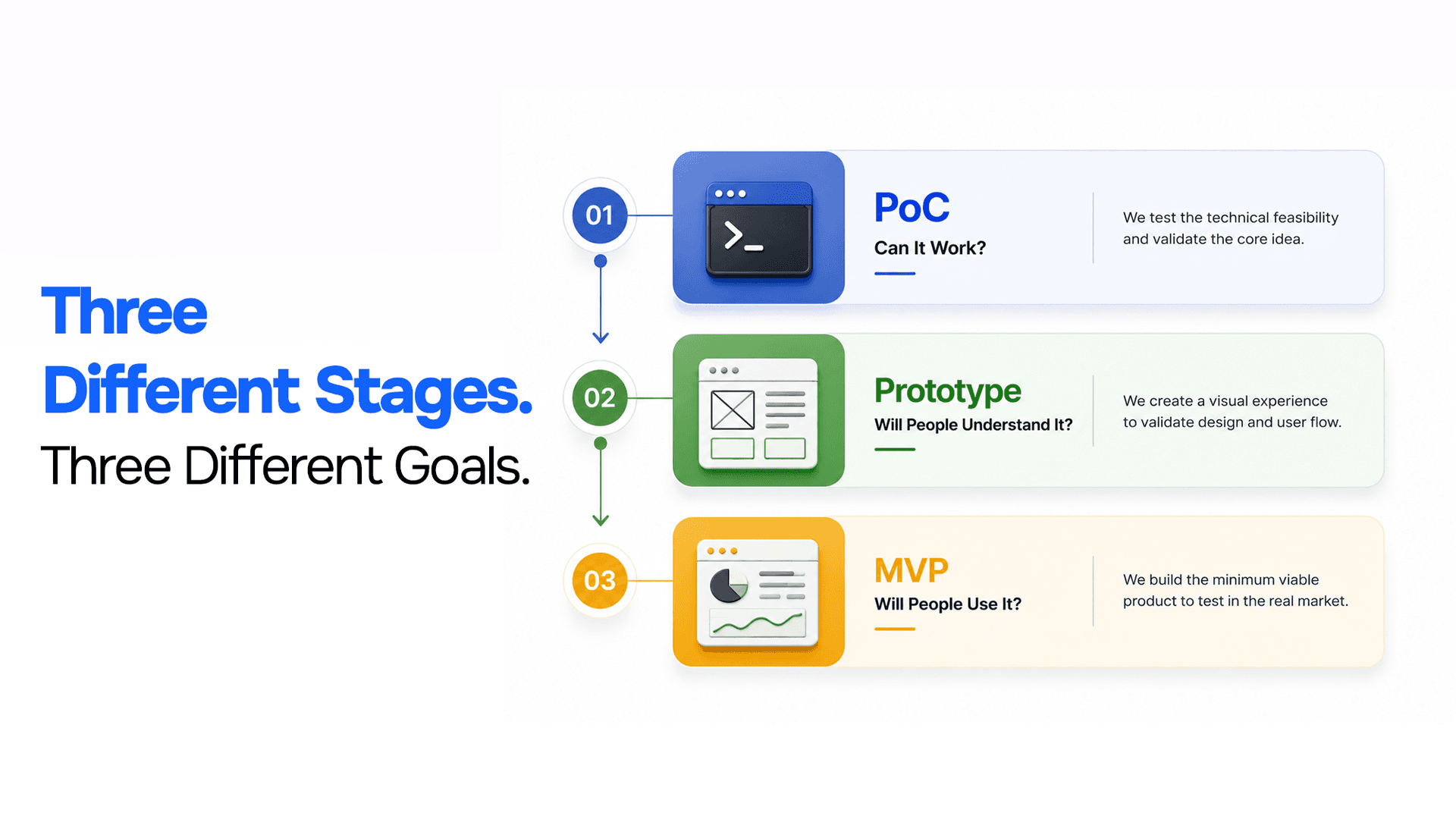 Proof of Concept
What Does a PoC Validate?
A PoC validates technical feasibility. It answers one narrow question: is this specific hard thing actually possible with the technology available?
When Should You Build a PoC?
Build a PoC only when there is genuine technical uncertainty, for example a novel algorithm, a difficult integration, or an AI capability you are not sure will perform. If the technology is already proven, a PoC is wasted effort.
What Does a PoC Typically Look Like?
It is usually a small piece of throwaway code or a lab experiment that proves the risky part works, with no user interface, polish, or production concerns.
PoC Example
If you want to know whether an AI model can accurately extract data from a specific type of financial document, you build a PoC that runs the extraction and measures accuracy. Nothing else.
What Is a Prototype?
What Does a Prototype Validate?
A prototype validates the user experience and design. It answers whether the product should work the way you imagine, before anyone writes production code.
When Should You Build a Prototype?
Build a prototype when you need to test flows, layouts, and interactions with stakeholders or a few users, and you want to catch confusing design early and cheaply.
Types of Prototypes
They range from low-fidelity paper sketches and wireframes to high-fidelity clickable mockups in a tool like Figma that feel almost real.
What a Prototype Does Not Do
A prototype does not actually work. There is no real backend, no real data, and no real users paying for anything. It is a model of the experience, not the product.
What Is an MVP (Minimum Viable Product)?
What Does an MVP Validate?
An MVP validates market demand. It is the smallest real, working version of your product that lets actual users use it, so you can learn whether they want it enough to keep using it or pay for it.
When Should You Build an MVP?
Build an MVP when the technology is proven and the design is understood, and your remaining big question is whether the market actually wants this. For deeper detail on the build itself, see our guide to MVP software development services.
What Makes an MVP Different From a Prototype?
The MVP is real software in production with real users; a prototype is a non-functional model used for testing. The prototype informs the MVP, but they are built for different purposes.
What an MVP Is Not
An MVP is not a broken, half-finished product, and it is not a prototype you decided to ship. It is a deliberately small but genuinely working product.
PoC vs Prototype vs MVP: The Key Differences
 PoC vs Prototype vs MVP Key Differences
Difference in audience: a PoC is for your technical team, a prototype is for stakeholders and test users, and an MVP is for real customers. Difference in functionality: a PoC proves one thing, a prototype simulates the experience, and an MVP actually works. Difference in development cost: PoCs are cheapest, prototypes are low to medium, and MVPs cost the most because they are real software. Difference in development time: PoCs and prototypes are days to weeks, while an MVP is weeks to a few months. Difference in validation: they reduce technical, design, and market risk respectively.
MVP vs Prototype: Are They the Same?
No, an MVP and a prototype are not the same, and treating them as the same is a costly mistake.
| Prototype | MVP |
|---|---|
| Non-functional model | Real, working software |
| Tests design and UX | Tests market demand |
| Used with a few testers | Used by real customers |
| Thrown away after learning | Becomes your actual product |
Can a Prototype Become an MVP?
Not really. The prototype's learnings should shape the MVP, but the MVP is built fresh as maintainable software. Shipping a prototype as an MVP is how teams end up with fragile products that need an immediate rebuild.
PoC vs MVP: What Is the Difference?
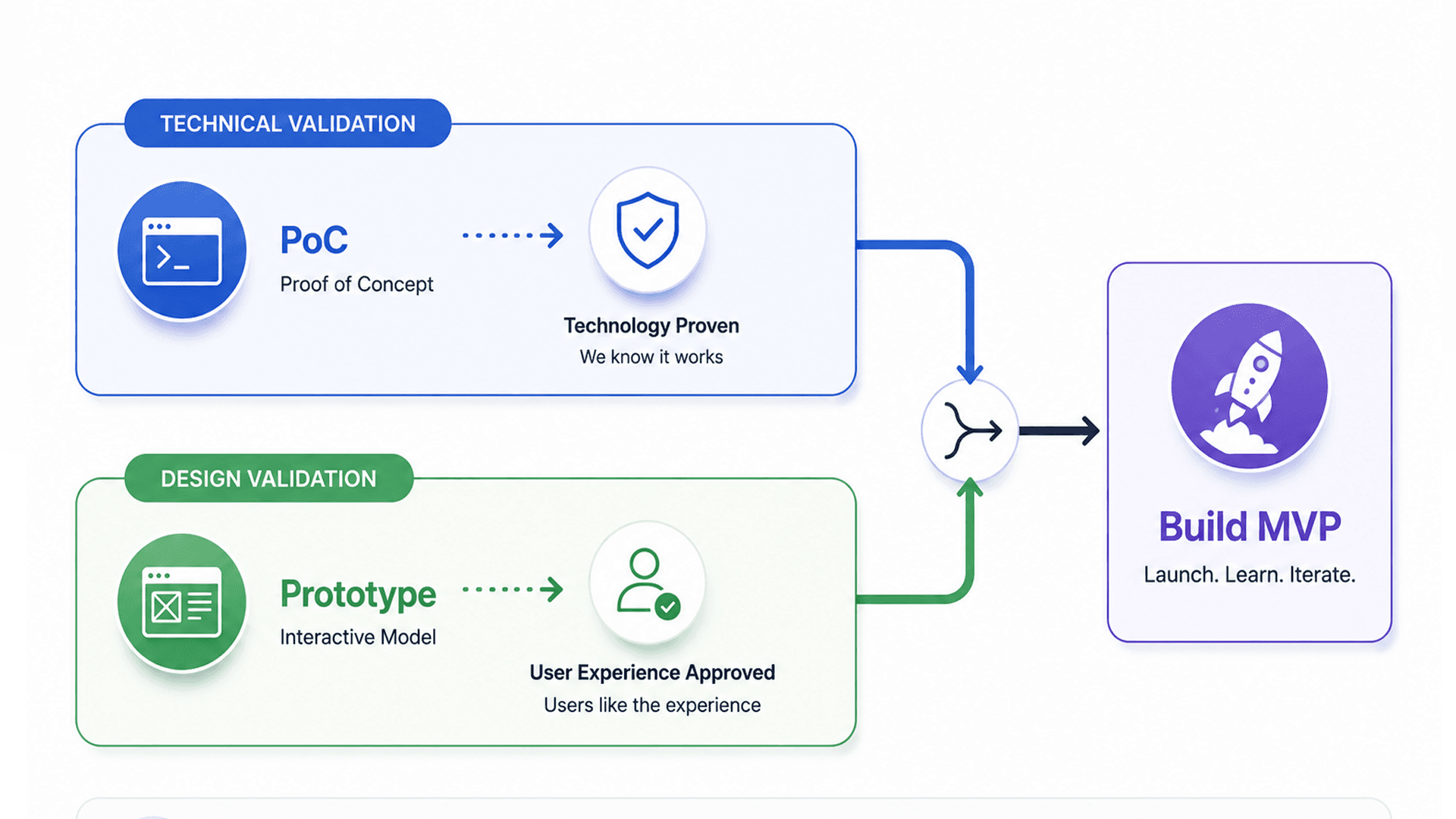
A PoC proves the technology can work; an MVP proves the market wants it. A PoC has no users and is often thrown away, while an MVP is launched to real customers and becomes the foundation of your product. If your risk is technical, you want a PoC. If your risk is demand, you want an MVP.
PoC vs Prototype: What Is the Difference?
A PoC tests whether something can be built; a prototype tests whether the experience should work a certain way. A PoC is code that proves feasibility with no interface. A prototype is an interface that simulates the experience with no real code underneath. That is the core difference between a proof of concept and a prototype.
Can You Build a PoC and Prototype at the Same Time?
Yes, and sometimes you should. If both the technology and the experience are uncertain, running a technical PoC and a design prototype in parallel lets you de-risk both quickly before committing to an MVP.
Should You Build a PoC, Prototype, or MVP First?
 Build PoC, Prototype, or MVP
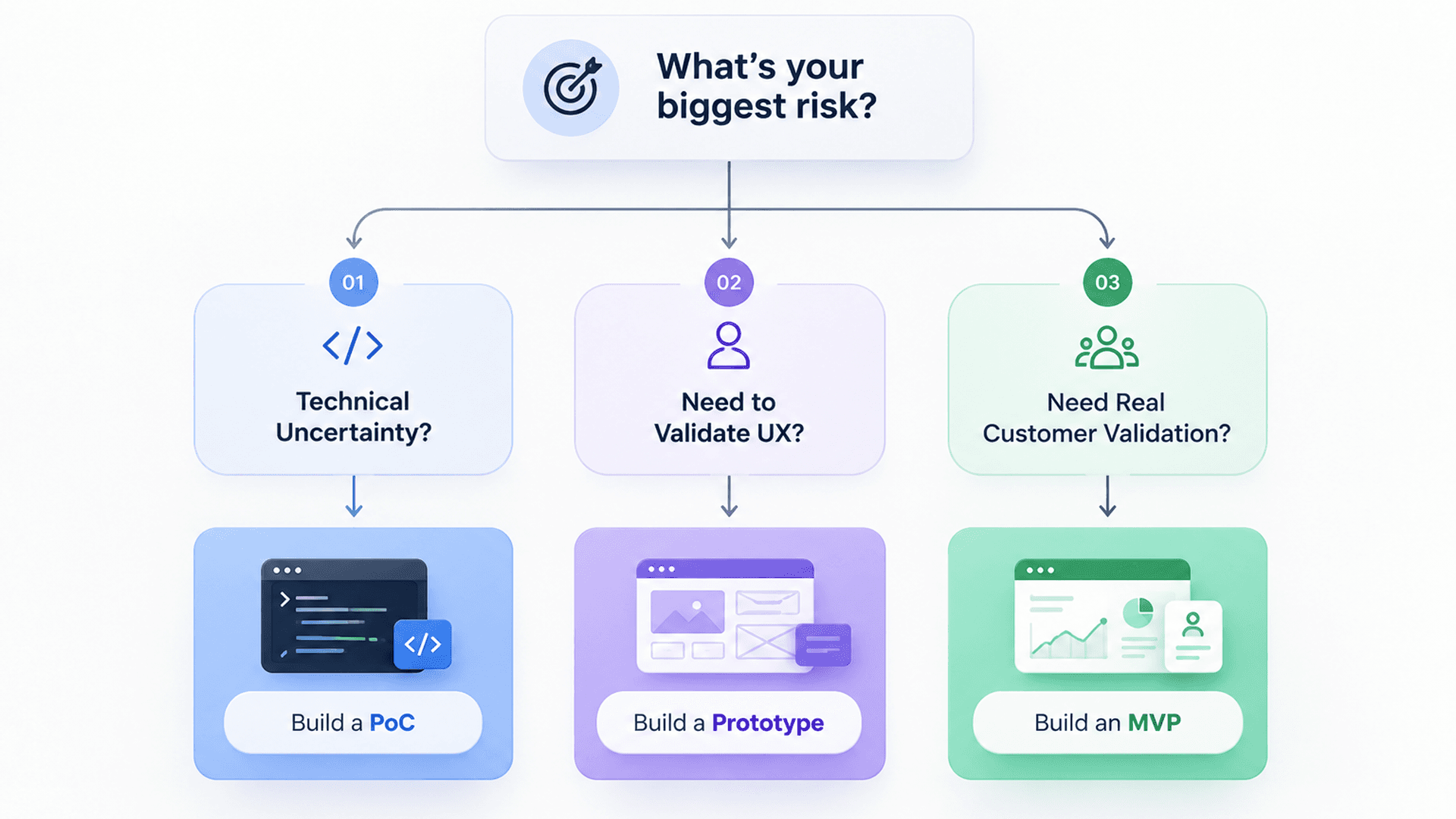
- Build a PoC first if you have serious doubt about whether the core technology can work at all.
- Build a prototype first if the technology is proven but the experience and flows are unclear.
- Build an MVP first if both are well understood and your only real question is market demand.
- Build a PoC and prototype before an MVP if both technical and design risk are high.
- Go directly to an MVP if you have strong evidence of demand and no meaningful technical or design uncertainty.
PoC vs Prototype vs MVP: Which One Is Right for Your Startup?
 PoC vs Prototype vs MVP: Which One Is Right for Your Startup
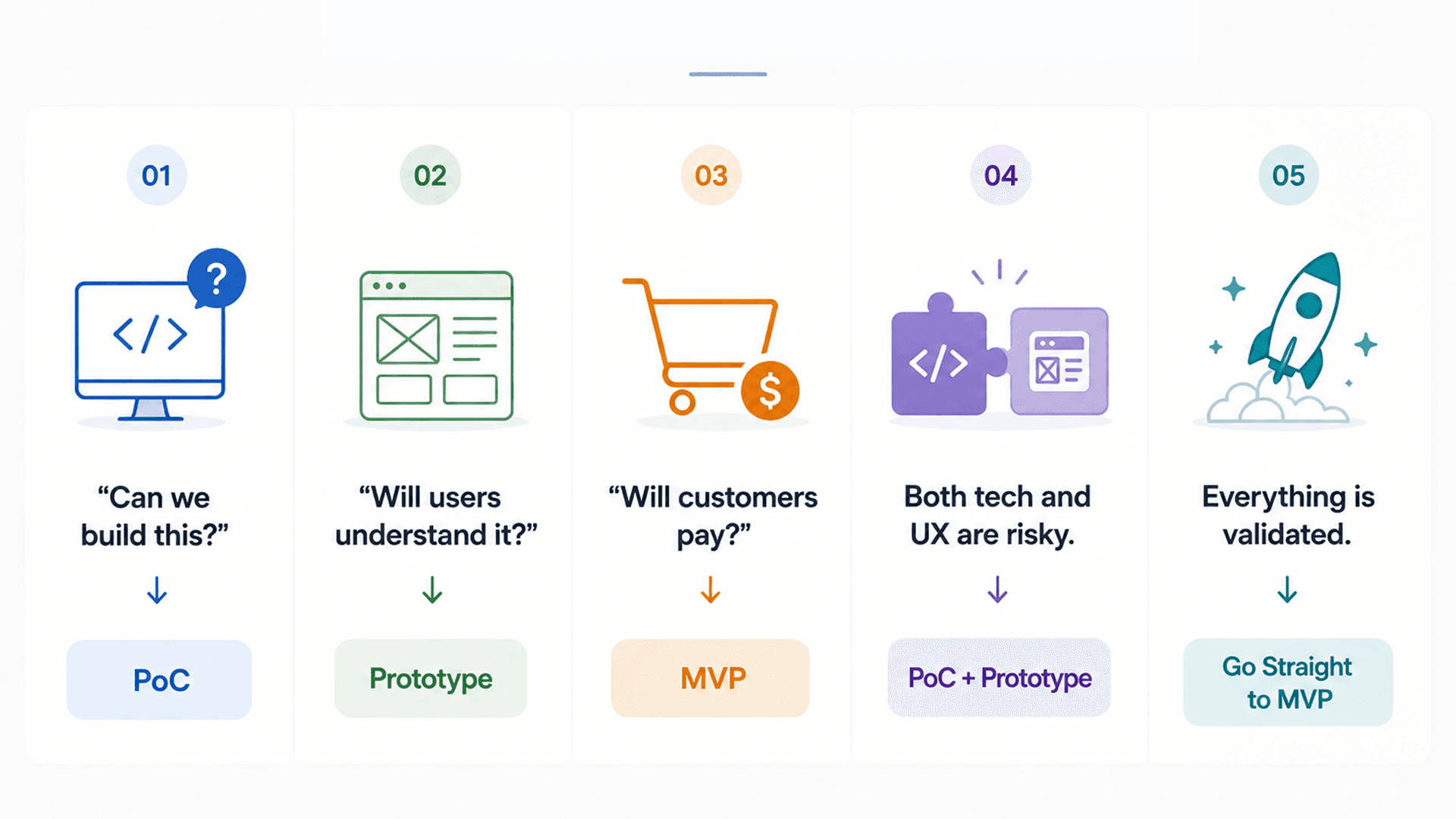
| Your biggest question | Build this |
|---|---|
| "Can this even be built?" | PoC |
| "Will people understand and like it?" | Prototype |
| "Will people actually use or pay for it?" | MVP |
| "We are unsure on both tech and UX" | PoC + Prototype, then MVP |
| "We have proven demand and no tech risk" | Go straight to MVP |
The right choice is simply the one that answers the question keeping you up at night. Do not build all three out of habit; build the validation that addresses a risk you genuinely have.
Final Takeaway: PoC vs Prototype vs MVP
 Final Takeaway: PoC vs Prototype vs MVP
The simplest way to remember it: a PoC reduces technical risk, a prototype reduces UX and design risk, and an MVP reduces market risk. Match the tool to the risk, and you avoid spending months answering the wrong question.
Where teams get into trouble is skipping this thinking entirely: shipping a prototype as if it were an MVP, or pouring budget into a full build when a cheap PoC would have revealed a dead end. If you have already built the wrong thing, or an early MVP that is now buckling, that is exactly the kind of problem I fix through AI code rescue and technical audits. And if you are still deciding what to build, book a free strategy call and we can figure out which one your idea actually needs.
Frequently Asked Questions (FAQ)
Is an MVP and a prototype the same?
No. A prototype is a non-functional model used to test whether a product experience makes sense; it is not built for real users. An MVP is real, working software released to real users to test whether they will actually use or pay for it. A prototype answers "does this feel right?" while an MVP answers "does the market want this?"
What is the difference between a proof of concept and a prototype?
A proof of concept (PoC) tests whether something is technically possible, often as throwaway code that proves a risky idea can work. A prototype tests whether the user experience and design make sense, usually as a clickable mockup with no real backend. A PoC answers "can we build it?" and a prototype answers "should it work this way?"
Can a prototype be converted into an MVP?
Not directly. A prototype is generally throwaway by design, built to test an experience rather than to run in production. The insights from a prototype should inform the MVP, but the MVP is built fresh as real, maintainable software. Trying to ship a prototype as an MVP is a common and expensive mistake.
Do I need a PoC, prototype, and MVP for my startup?
Rarely all three. Most startups can skip straight to a prototype and then an MVP. A PoC only makes sense when there is genuine technical uncertainty, such as a novel algorithm or a hard integration. Build only the validation steps that address a real risk you actually have.
How do I know whether I need a PoC or an MVP?
Ask what you are unsure about. If your biggest risk is "can this even be built?", you need a PoC. If your biggest risk is "will anyone use or pay for this?", you need an MVP. If the technology is proven and only market demand is uncertain, skip the PoC and go to an MVP.
Stuck on a web app, automation, or AI project?
Fifteen minutes, free. You describe the blocker, I tell you what I would fix first. No deck, no pitch — and if I am not the right fit, I will say so.
Book Your Free 15-Min Strategy CallRelated to: PoC vs Prototype vs MVP: What's the Difference and What Should You Build?If you found this article helpful, consider buying me a coffee to support more content like this.
Related Articles

Looking for an MVP app development company? Learn how to evaluate services, technical expertise, cost, timelines, and startup fit before choosing a partner.
MVP software development services explained: the process, cost, timelines, FinTech MVPs, post-launch support, and how to choose the right development partner.
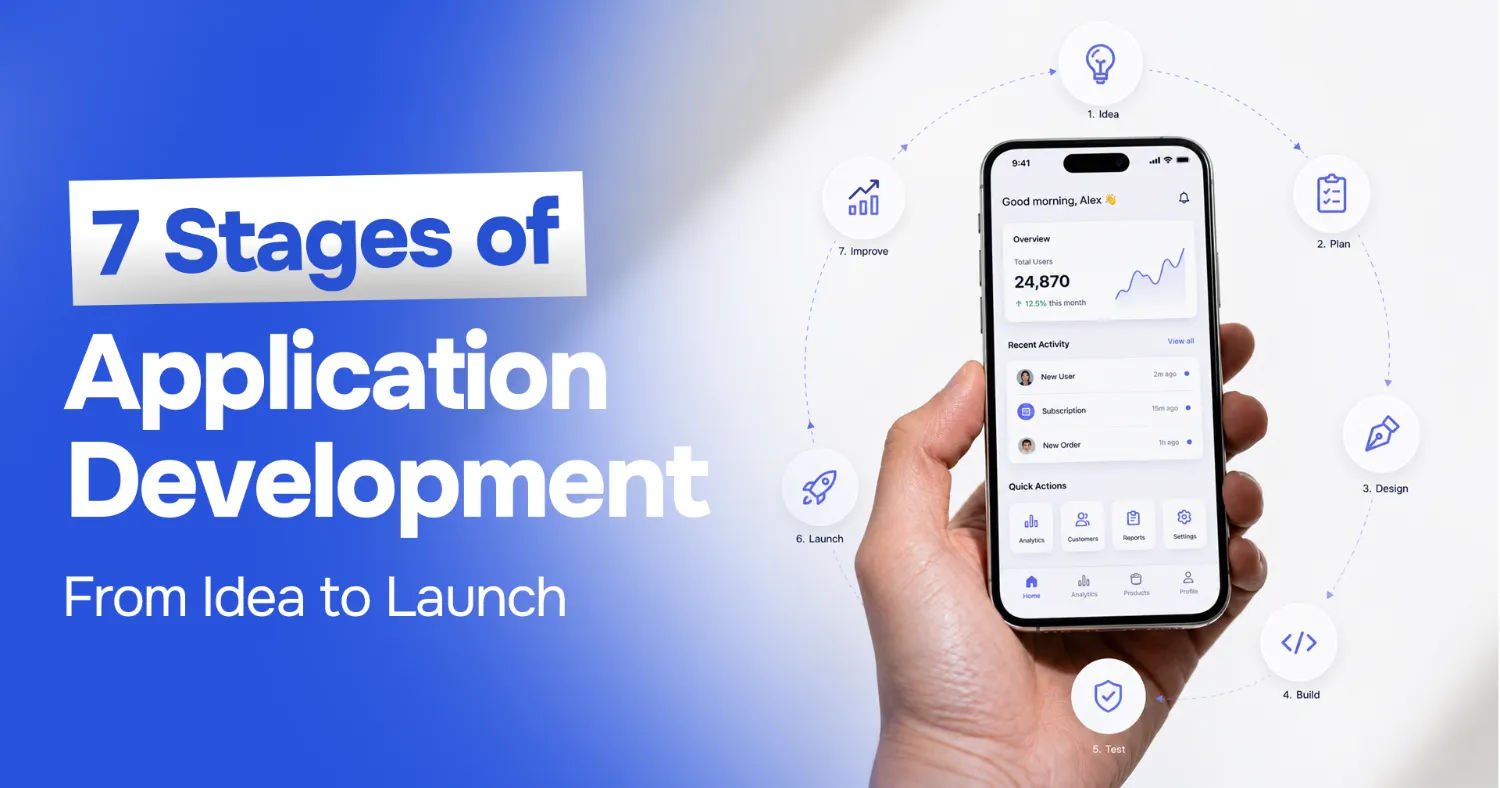
Learn what the 7 stages of app development are, the complete app development process, timelines, lifecycle, and how AI tools like Copilot improve development.
Stuck on a web app, automation, or AI project?
Fifteen minutes, free. You describe the blocker, I tell you what I would fix first. No deck, no pitch — and if I am not the right fit, I will say so.
Book Your Free 15-Min Strategy CallRelated to: PoC vs Prototype vs MVP: What's the Difference and What Should You Build?